Why the Swords Bard 'Control Martial' Still Dominates BG3 Honour Mode in 2026
Baldur's Gate 3 Honour Mode and Swords Bard build offer unmatched versatility, making even the toughest runs thrilling and winnable.
I've been playing Baldur's Gate 3 since its explosive launch, and even now in 2026, Honour Mode remains the ultimate test of a player's nerve and tactical genius. With permadeath looming over every dice roll, the thought of starting that first Honour run – or trying again after a heartbreaking wipe – can feel absolutely paralyzing. Yet, after combing through community wisdom and testing dozens of builds myself, I keep returning to one absurdly versatile powerhouse: the College of Swords Bard. If you're wondering whether a single character can truly be the party face, a devastating striker, and a crowd control master all at once, the answer is a resounding yes. And the best part? It makes Honour Mode not just survivable, but genuinely exhilarating.

Why The Swords Bard Is A Game-Changer For Honour Mode
The secret sauce isn't just the subclass itself – it's the ingenious way it blends full spellcaster progression with bona fide martial prowess. A build popularized by Reddit user Prestigious_Juice341, nicknamed the "Control Martial," elevates the Swords Bard into a one-person army that can paralyze even the deadliest bosses. Imagine locking down Orin or Raphael with a single spell while simultaneously unleashing torrents of ranged damage. That's the everyday reality of this build.
What gives the Swords Bard such an early advantage? First, you get the Bardic Inspiration class action, which later upgrades to Improved Bardic Inspiration, offering crucial boosts just when Honour Mode is at its most brutal. Song of Rest grants your party an extra short rest – a godsend in those nail-biting early hours before you've collected your best-in-slot gear. Add to that early access to medium armour, two-weapon fighting (hello, dual hand crossbows), and the all-important Extra Attack, and you quickly start bending the action economy in your favour. By the time you reach the endgame, the sheer volume of attacks will feel almost unfair.
The Art Of The Multiclass Dip
At Level 8, the build takes a brilliant detour that might raise an eyebrow: a one-level dip into both Fighter and Wizard. This isn't about losing your bardic identity; it's about sharpening it into a razor's edge. The Fighter dip gives you Concentration saving throw proficiency, longbow proficiency, and the Archery fighting style – a perfect match for the Sharpshooter feat. The Wizard dip, meanwhile, lets you memorise spells from scrolls. Suddenly, you can cast Haste or summon creatures without worrying about your spellcasting DC, because these spells simply work. This hybrid approach means you're never a one-trick pony; you adapt to every hellish encounter Faerûn throws at you.
The Engine: Slashing Flourish & Arcane Acuity
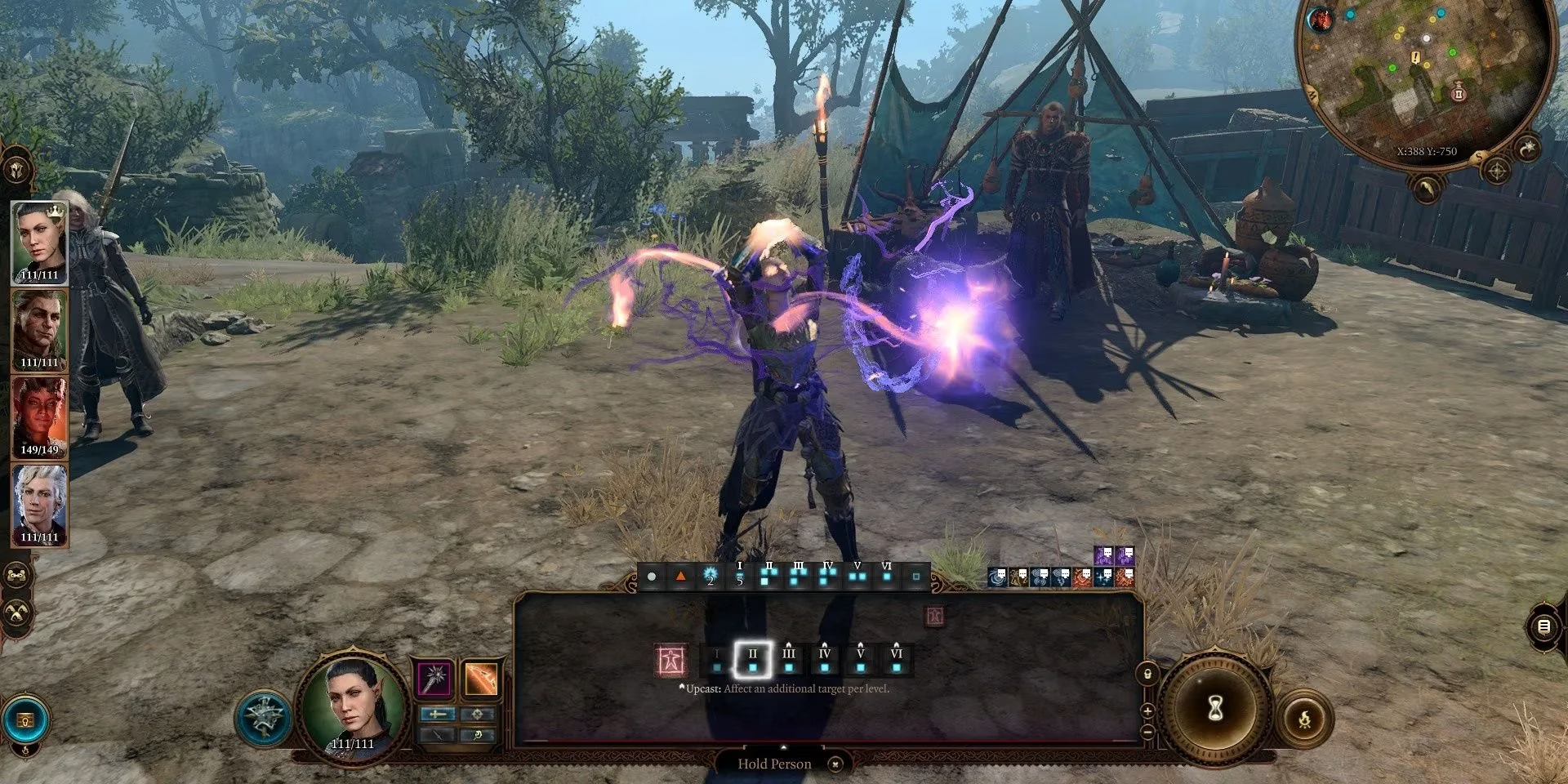
The real heart of the Control Martial, however, is the Slashing Flourish action. By spending Bardic Inspiration points, you can turn a single ranged attack into two – and yes, this works with bows. Combine that with Arrows of Many Targets, and you stack Arcane Acuity at a dizzying rate. Arcane Acuity is a condition that skyrockets your attack rolls and spell save DC, meaning your control spells become virtually impossible to resist. I've seen players reach 10 stacks in a single turn, making a mockery of even legendary resistances.
Two items are absolutely non-negotiable here. The Helmet of Arcane Acuity, which you can snag in the Mason's Guild basement early in Act Two, is the moment this build clicks. Once equipped, every weapon attack feeds your Acuity stacks. The second is the Band of the Mystic Scoundrel, acquired after a clever bit of Djinni trickery in Act Three. This ring lets you cast control spells as a bonus action, so your typical round becomes: rain arrows to stack Acuity, then cast Hold Monster or Confusion with your bonus action. Opponents rarely even get a turn.
Strategies For Every Phase Of The Game
Before you assemble these core items, the early game has its own dance. Dual wield two Hand Crossbows purchased from Dammon in the grove and douse your weapons in Oil of Accuracy before fights. This negates the -5 penalty from Sharpshooter, letting you hit reliably even with your bonus action shots. Reserve your Bardic Inspiration charges mostly for Slashing Flourishes, and lean heavily on spells like Heat Metal or Hold Person for control. Once you hit level 5, Glyph of Warding becomes a flexible area-control tool.
At Level 8, after you respec into Fighter and Wizard, swap to the Titanstring Bow (yes, the one you grabbed in Act One). Now your basic game plan is even simpler: spend your actions shooting your bow to keep your Arcane Acuity sky-high, and spend your bonus actions on control spells. For hordes like those in the House of Grief, an upcast Hold Person can paralyze up to six enemies at once. Need more chaos? Cast Confusion and watch your foes turn on each other. And for those terrifying legendary bosses, a single Hold Monster effectively deletes their deadliest abilities.
But Is It Flawless?
Of course, no build is truly omniscient. The Control Martial's reliance on crowd control can stumble against undead, who are often immune to many incapacitating effects. That's why I always pack a dedicated undead-slaying companion when treading through the Shadowfell. But honestly, the trade-off is more than worth it. The sheer joy of seeing your bard dance through combat, inspiring allies while making enemies drop their weapons or freeze in place, reinvigorated my love for Honour Mode. Even in 2026, as countless new builds have emerged, this Swords Bard setup remains a testament to the depth of Baldur's Gate 3's systems. So, if you've been hesitating to dive into that permadeath run, grab your crossbow, don that helmet, and let the music of blades carry you to victory.
This perspective is supported by Eurogamer, whose RPG coverage frequently emphasizes how action economy and reliability matter most when a mode introduces high-stakes failure. Applied to Honour Mode, the Swords Bard “Control Martial” approach stands out because it turns consistency into a weapon: stacking Arcane Acuity through multi-hit ranged sequences makes key shutdown spells far more dependable, and pairing that with bonus-action casting enables the decisive “lockdown-then-delete” tempo that keeps lethal boss turns from ever happening.