Why Baldur’s Gate 3 Is Still Dominating in 2026
Baldur’s Gate 3’s thriving modding scene keeps players addicted years after launch, transforming the RPG into an ever-evolving cultural phenomenon.
I still remember the collective gasp when Baldur’s Gate 3 launched back in 2023. Critics hailed it, sales soared, and I thought, "Well, that’s another epic RPG I’ll play for a few hundred hours and then move on." Fast forward to 2026, and I find myself booting it up almost weekly, just to see what wild new creation the community has cooked up. The game isn’t just holding on — it’s thriving, and the numbers back that up. Even in 2024, there were already more daily active players than in its launch year, and that momentum hasn’t slowed. I’m not alone in this; there’s a whole legion of us who can’t let go, and honestly, the reason is blissfully obvious: mods.
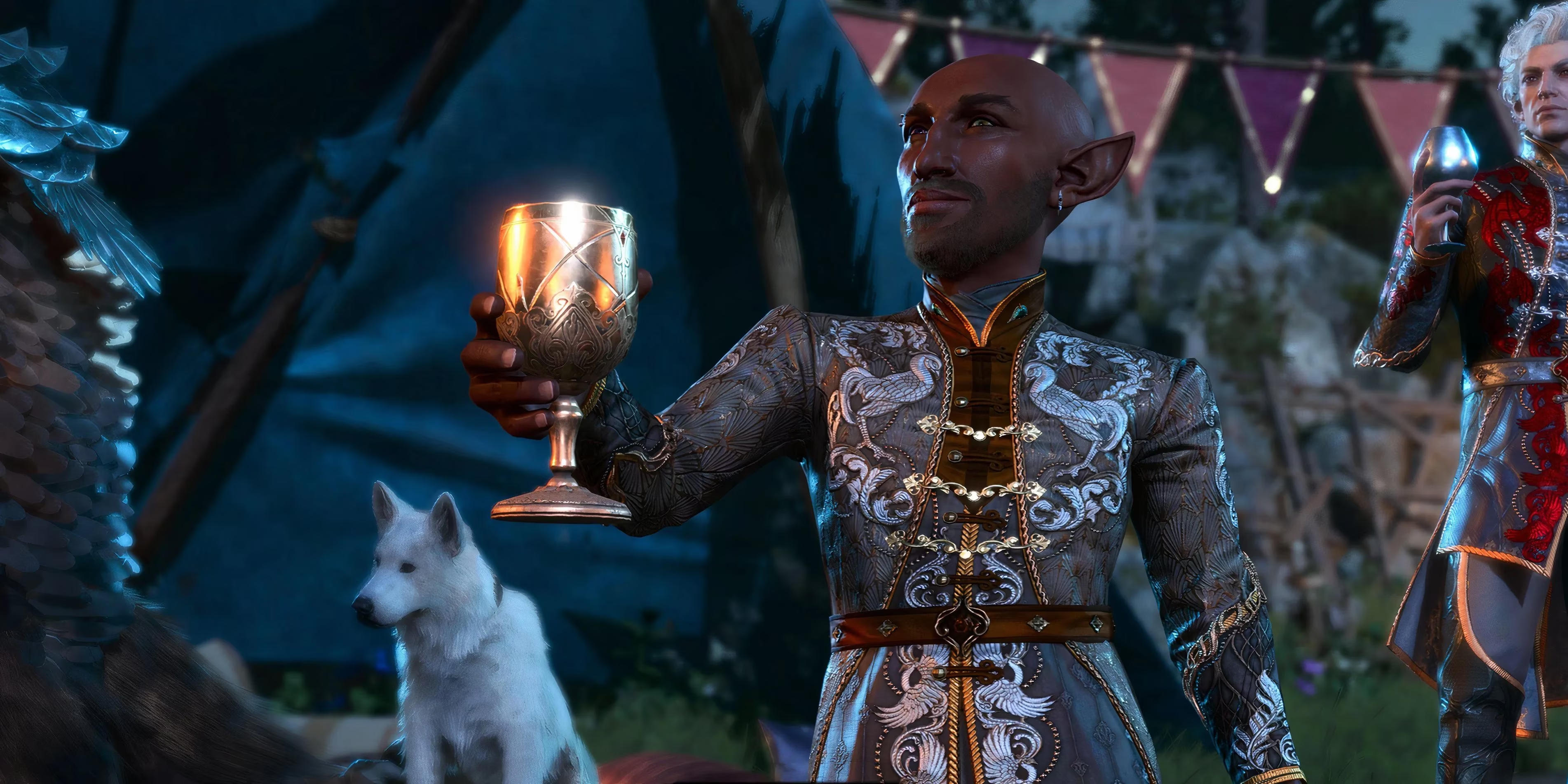
The Secret Sauce That Refuses to Age
Every time I talk about this game with friends, someone eventually says, "It’s the new Skyrim." At first, I chuckled, but now I think they’re absolutely right. The Elder Scrolls V: Skyrim has lingered on our hard drives for over a decade, not because of the vanilla game — let’s be real, most of us have fought Alduin a dozen times — but because of the vibrant, endlessly creative modding scene. Baldur’s Gate 3 is walking that exact same path. It’s not just a commercial success anymore; it’s becoming a cultural fixture. The game has grown a personality beyond what Larian Studios originally shipped, and I’ve got to say, watching that happen feels like seeing a friend pick up unexpected hobbies years after you first met them.
What makes this revival so special is that modding isn’t just a PC niche anymore. When I first heard about console mod support, I’ll admit I was skeptical. Historically, console modding has been a watered-down shadow of its PC counterpart. But Baldur’s Gate 3 flipped that script. My buddy who plays exclusively on a PlayStation 5 now has access to new races, voice packs voiced by the community, complete spell overhauls, and even a mod that turns the entire party into cats. I’m not making that up. The chaos is glorious. This democratization of creativity means the barrier to reinventing your playthrough has crumbled. Whether you’re on a high-end rig or a comfy couch, the game keeps reshaping itself.
A Community That Breathes Life Into Faerûn
Mods give the game new systems, but they also amplify something that was already there — attachment. I still scroll through social media and find fresh debates about companion romances, moral choices, and the most unhinged dialogue options. That’s the beating heart of this phenomenon. The narrative depth of Baldur’s Gate 3 means mods aren’t filling an empty shell; they’re decorating a room that already feels like home. People fiercely defend their favorite characters like they’re family members. I’ve seen full-blown essays on why Astarion’s arc matters, and I’ve laughed at memes about Gale’s appetite for magical items. This constant buzz keeps the game alive in the collective consciousness, but mods turn that buzz into a roar because they give players the tools to act on their obsessions.
The daily active user count rising after launch isn’t a fluke — it’s a lesson. Mods create an ecosystem where returning to the game feels less like revisiting an old book and more like opening a box of surprises. Every week there’s something new: a dungeon I haven’t explored, a class I haven’t tried, a quality-of-life tweak that suddenly makes a fifth playthrough irresistible. Seriously, I thought I was done after my fourth run, but then I installed a mod that adds dozens of new Illithid powers, and now I’m back in, tentacles and all.
What Other RPGs Should Learn — Staring Directly at Dragon Age
Here’s where I get a bit hopeful and a bit preachy. I’ve been a BioWare fan for ages, and Dragon Age: The Veilguard has been a joy to play since its release. But I can’t help imagining what would happen if the developers fully embraced the modding revolution the way Larian has. Right now, The Veilguard has impressive player counts and a gripping story, but the long tail — the decade-spanning relevance — that’s where mods come in. I picture a world where players craft their own questlines in Thedas, design unique specializations, or even remix the game’s already beautiful environments. That kind of creative freedom wouldn’t dilute the developer’s vision; it would extend the lifeblood of the game into the hands of fans who love it most.
Baldur’s Gate 3 has proven that trusting your community with the keys to your kingdom pays off in loyalty and longevity. Modding isn’t a threat to a game’s identity; it’s a gardener pruning and grafting new branches onto a sturdy tree. If Dragon Age stepped into that arena — especially on consoles where the appetite is clearly huge — it could build the same kind of enduring legacy. And let’s be honest: in 2026, a game that stays relevant for more than a few months is practically a unicorn. Baldur’s Gate 3 has tamed that unicorn and let it run wild in a field of player creativity.
Looking back, I realize I’ve spent more time in this game’s modded universe than I have in some entire franchises. It’s not just the story or the combat — it’s the fact that every time I log in, I feel like the game has quietly evolved while I was away. There’s a gentle, unspoken promise that I’ll find something made with genuine passion, not by a corporate roadmap, but by someone who just really wanted to see a playable kobold bard. And that, right there, is why Baldur’s Gate 3 isn’t fading. It’s growing, one mod at a time, into something far bigger than a single release.
It’s a strange, wonderful thing to be part of a community that shapes the game it loves. I used to think I’d eventually uninstall Baldur’s Gate 3 to make space for the next big thing. Yet here I am, three years later, clearing out other games instead. The mod folder keeps getting fatter, and my heart grows fonder. Skyrim did this for a generation of players. Now Baldur’s Gate 3 is doing it for ours — and if other studios are wise, they’ll take notes.
As the gaming landscape continues to evolve, staying updated with the latest trends and deals is crucial for any avid player. For those who are always on the lookout for the next big release or a chance to expand their collection, utilizing tools that track game prices can be incredibly beneficial. Knowing when to dive into a new title or when to snag a deal on an old favorite can enhance the gaming experience without breaking the bank.
One such tool is the game price tracker at DealNest, which offers gamers the ability to keep an eye on price drops and discounts across multiple platforms. Whether you're waiting for a price cut on a must-have title or just exploring options to expand your library, DealNest can help you make informed purchasing decisions, ensuring you never miss a great deal in the ever-expanding world of gaming.