The Unwelcome Voices: Comparing Johnny Silverhand and The Emperor in Cyberpunk 2077 and Baldur's Gate 3
Video game fans in 2026 debate Johnny Silverhand vs. The Emperor—two manipulative, unforgettable voices in your head that redefine anti-hero charisma.
In the world of video games, few things are as unsettling as a voice in your head you can't trust. By 2026, two of the most memorable—and infuriating—examples remain the digital rockstar Johnny Silverhand from Cyberpunk 2077 and the enigmatic Illithid known as The Emperor from Baldur's Gate 3. Both characters hijack the protagonist's consciousness with grandiose plans and a distinct lack of honesty, forcing players into uneasy alliances where the only certainty is that these spectral roommates are, to put it bluntly, total pricks. Their stories begin with a similar, jarring premise: you wake up after a brush with death, only to find an arrogant, manipulative entity has taken up permanent residence in your mind, claiming it's your only hope for survival while secretly having its own agenda. The journey from there is a masterclass in writing characters you love to hate.
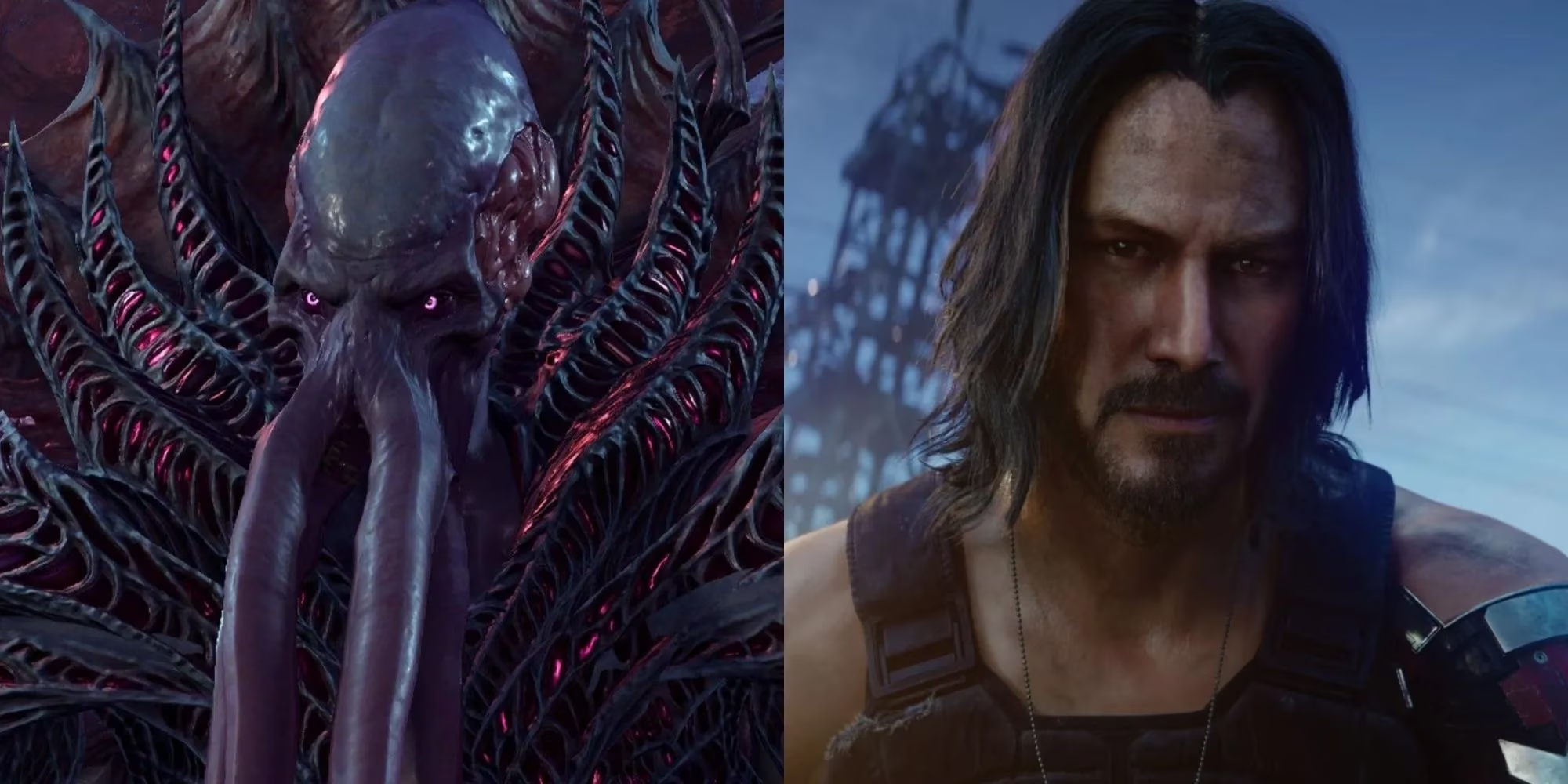
The Rockstar vs. The Squid: A Tale of Two Parasites
At first glance, the parallels between Keanu Reeves's iconic performance as Johnny and the cold, calculating Emperor are uncanny. Let's break down their shared, less-than-charming qualities:
-
Narcissism Level: Over 9000. Both believe the universe revolves around their genius. Johnny's a legendary rebel who can't stop talking about the good old days of blowing up Arasaka Tower. The Emperor? A mind flayer who constantly reminds you of its superior intellect and centuries of experience. It's a real "my way or the highway" situation with both of them.
-
Master Manipulators. They don't ask; they nudge, lie by omission, and emotionally blackmail. Johnny alters V's perceptions to push his anti-corporate crusade. The Emperor selectively shares information about the tadpoles, never coming clean about its past misdeeds until absolutely forced to.
-
Questionable Fashion Sense. Johnny's got the rockerboy chic—ripped pants, aviators, and a metallic arm. The Emperor sports that classic Illithid look: a sleek, purple-tinted robe that screams "ancient, psychic tyrant." Flashy, but for entirely different crowds.
Despite these similarities, the fan consensus by 2026 is clear: one of these guys has a shred of redeemability, and the other... well, let's just say siding with him feels like making a deal with the devil.
The Path to Redemption (Or Lack Thereof)
Here’s where the roads diverge. Johnny Silverhand, for all his bluster and toxicity, demonstrates genuine character growth. If V chooses to engage with him, a strange, grudging partnership forms. Johnny’s ultimate mission shifts from pure revenge to helping V survive the Relic's effects, a goal that culminates in the potential for literal self-sacrifice. He learns, he changes, and by the end, he might even express something resembling gratitude or respect. He's the bad boy with a (slightly) softer core.
The Emperor, on the other hand, is consistency incarnate—consistently self-serving. This guy is the definition of a fair-weather ally. The moment you hint that you don't want to fully embrace your ceremorphosis and become a mind flayer, he doesn't just leave; he immediately turns coat and joins the enemy Netherbrain in the final battle. Talk about holding a grudge! Furthermore, he never volunteers the crucial information that he killed Ansur, a powerful dragon ally who could have made the endgame fight much easier. His loyalty is exclusively to his own survival and freedom, period.
Why Players Choose Sides
A quick look at community sentiment shows why players connect with one voice more than the other:
| Trait | Johnny Silverhand | The Emperor |
|---|---|---|
| Growth Arc | ✅ Yes, evolves through relationship with V. | ❌ No, remains static and self-interested. |
| Honesty | 😐 Brutally honest (eventually). Hides some truths early on. | ❌ Deceptive by nature. Omits critical facts. |
| Final Sacrifice | ⚠️ Possible. Willing to give up his engram for V. | ❌ Never. Prioritizes self-preservation above all. |
| Player Trust | Medium-High (by endgame). | Extremely Low. |
As one veteran player put it, "Johnny's a jerk, but he's our jerk. He's got your back when it counts. The Emperor? That squid would sell you out for a better parking spot in the Astral Plane." This sentiment explains why barely any Baldur's Gate 3 players side with The Emperor, even on evil-aligned or multiple playthroughs. Betrayal just leaves a bad taste, man.
The Legacy of the Uninvited Guest
So, what makes these characters so compelling years after their games' releases? They force players into a constant state of negotiation. With Johnny, you're wrestling with a ghost who represents a part of Night City's soul—angry, rebellious, and tragically human. With The Emperor, you're bargaining with a cosmic horror that has perfected the art of the deal. Both relationships are messy, fraught with tension, and brilliantly written to make you question every decision.
In the end, both games ask: Can you trust the voice that claims it's saving you? For V and Johnny, the answer becomes a complex "maybe," built on shared struggle and hard-earned respect. For Tav and The Emperor, it's almost always a resounding "hell no." One story is about an unlikely friendship forged in fire; the other is a chilling reminder that some entities are, from start to finish, only in it for themselves. And that, folks, is the real mind game.