The Emperor of Baldur's Gate 3: Master Manipulator or Misunderstood Savior?
Explore the ultimate moral dilemma in Baldur's Gate 3: is the Emperor a savior or a manipulator? This captivating analysis delves into his complex motives and the agonizing choice between siding with him or freeing Orpheus.
In the sprawling, mind-bending epic that is Baldur's Gate 3, no single entity has players clutching their controllers and shouting at their screens quite like the enigmatic Emperor. As of 2026, years after the game's seismic release, the debate rages on hotter than Avernus's forge. Is he a silver-tongued savior, the only thing standing between Faerûn and ceremorphosis? Or is he a master puppeteer, pulling the strings of your parasite-addled party with the cold, calculated grace of a chess grandmaster playing against toddlers? The choice between siding with this rogue mind flayer or freeing the githyanki prince, Orpheus, remains one of gaming's most deliciously agonizing moral quandaries. Let's dive into the swirling, psionic storm of his character.
The Emperor: Your Psionic Guardian Angel (With an Agenda)
Look, let's give the tentacled fellow his due. The Emperor is the reason your ragtag band of misfits isn't a buffet of brain-smoothies for an Elder Brain. He's your personal guardian in the Astral Prism, holding back the absolute worst of the tadpole's influence. If you decide to put your faith in him, he's shockingly… helpful. He guides you, protects you, and provides the key to gathering the Netherstones. Heck, he even offers you a path to ultimate power, whispering sweet nothings about embracing your potential. It's a compelling sales pitch!
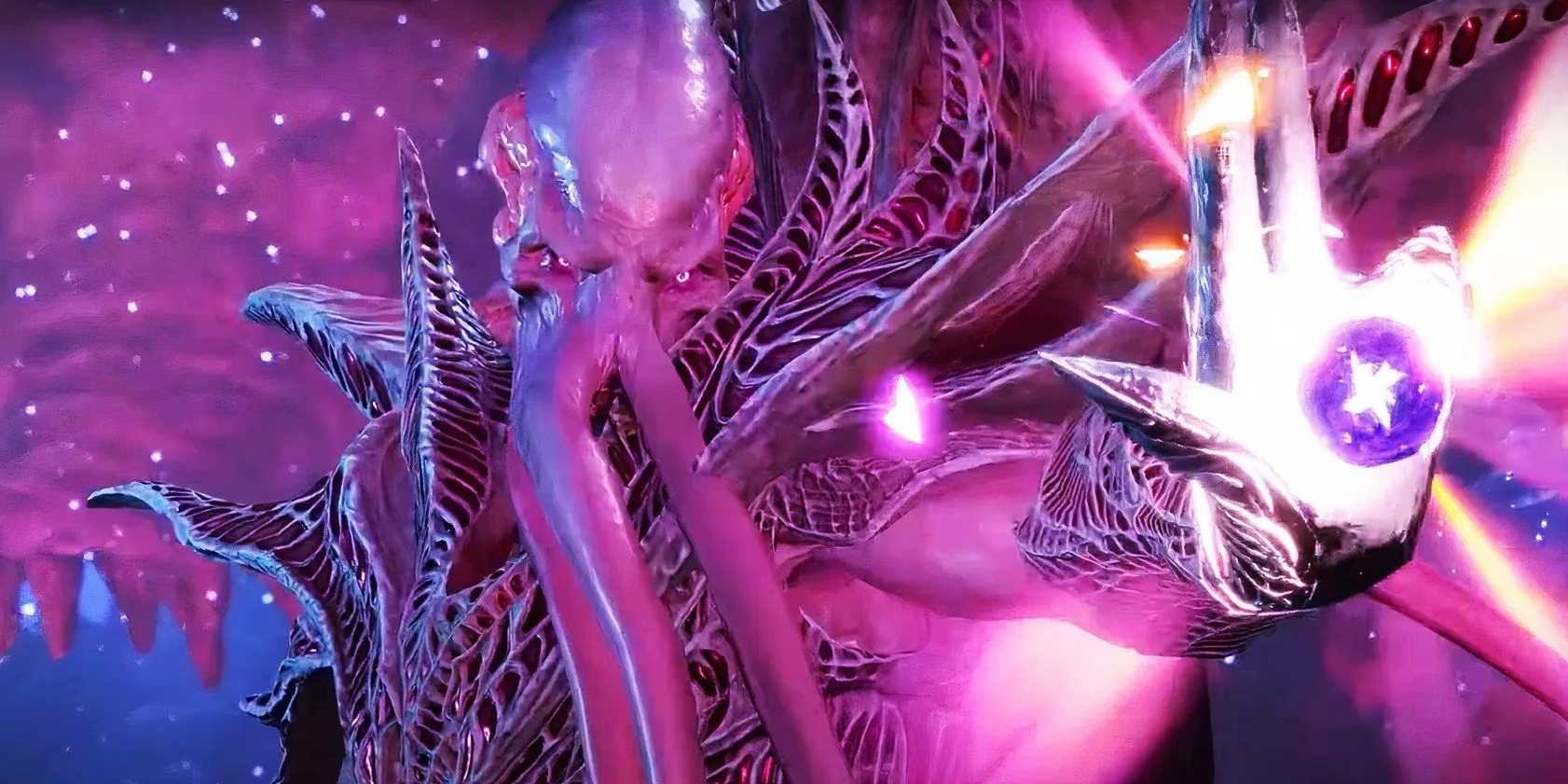
Here’s the kicker, the big reveal that makes you go, "huh": he actually keeps his word. If you play your cards right and defeat the Netherbrain, he upholds his end of the bargain to remove your parasite. No funny business, no last-minute betrayal (if you stay on his good side). His stated motivation? Freedom. Not conquest, not domination—just the simple, profound desire to be his own master. And let's be real, wanting to be free from a giant, psychic hive-mind overlord is a mood we can all understand. He even has a soft spot for his old stomping grounds; it's the Emperor, not anyone else, who takes the initiative to save Baldur's Gate itself. You've gotta respect the hometown pride, even if it's coming from a creature that snacks on memories.
The Other Side of the Coin: A Web of Lies and Self-Preservation
Now, hold on. Don't go naming your first brain pet after him just yet. Because here’s where things get… slippery. The Emperor is, without a shadow of a doubt, a master manipulator. He speaks in half-truths, omits crucial details, and straight-up lies to your face with the calm demeanor of someone discussing the weather. That whole "I want to be rid of my tadpole too" schtick? Yeah, by the time you meet him, he's fully embraced his illithid nature and is low-key trying to get you to join the squid club. Awkward.
His actions reek of pure, unadulterated self-interest. He doesn't see you as an equal—how could he? He's operating on a cognitive level that makes your genius wizard look like a confused kobold. You're a tool, a means to an end. This becomes painfully clear in Act Three when he… well, let's just say he tries a very peculiar method of "team building" that feels less like bonding and more like emotional manipulation 101. And if you dare to defy him, to choose Orpheus over him? He flips the table, says "peace out," and scurries off to re-join the very Elder Brain he swore to destroy, dooming the world to save his own hide. Talk about a sore loser!
This self-preservation instinct isn't new. He sacrificed his dragon best friend, Ansur, and mentally dominated Duke Stelmane without a second thought. He's the definition of a neutral character—his morality is a mirror, reflecting whatever choice you make about him.
The Orpheus Dilemma: A Choice That Defines Your World
This is the heart of the conflict. Freeing Orpheus feels like the "heroic" choice. You're liberating a prince, striking a blow against a tyrant (Vlaakith), and teaming up with the original source of the protective power you've been using. It promises a future for the githyanki free from lich-queen oppression. But is it pragmatically the best choice? Orpheus, noble as he is, initially sees you as just another illithid pest to be squashed. His help is born of necessity, not alliance.
Choosing the Emperor, meanwhile, is a gamble on a known quantity—a selfish, brilliant, powerful ally who has, thus far, delivered results. It's the cynical, realpolitik approach to saving the world. But it condemns Orpheus and leaves the githyanki under Vlaakith's cruel thumb. The game brilliantly refuses to paint one ending as universally "good" or "evil." Both can save the day. The "better" ending is the one that aligns with your character's morals and story.
The Ultimate Verdict: A Reflection of You
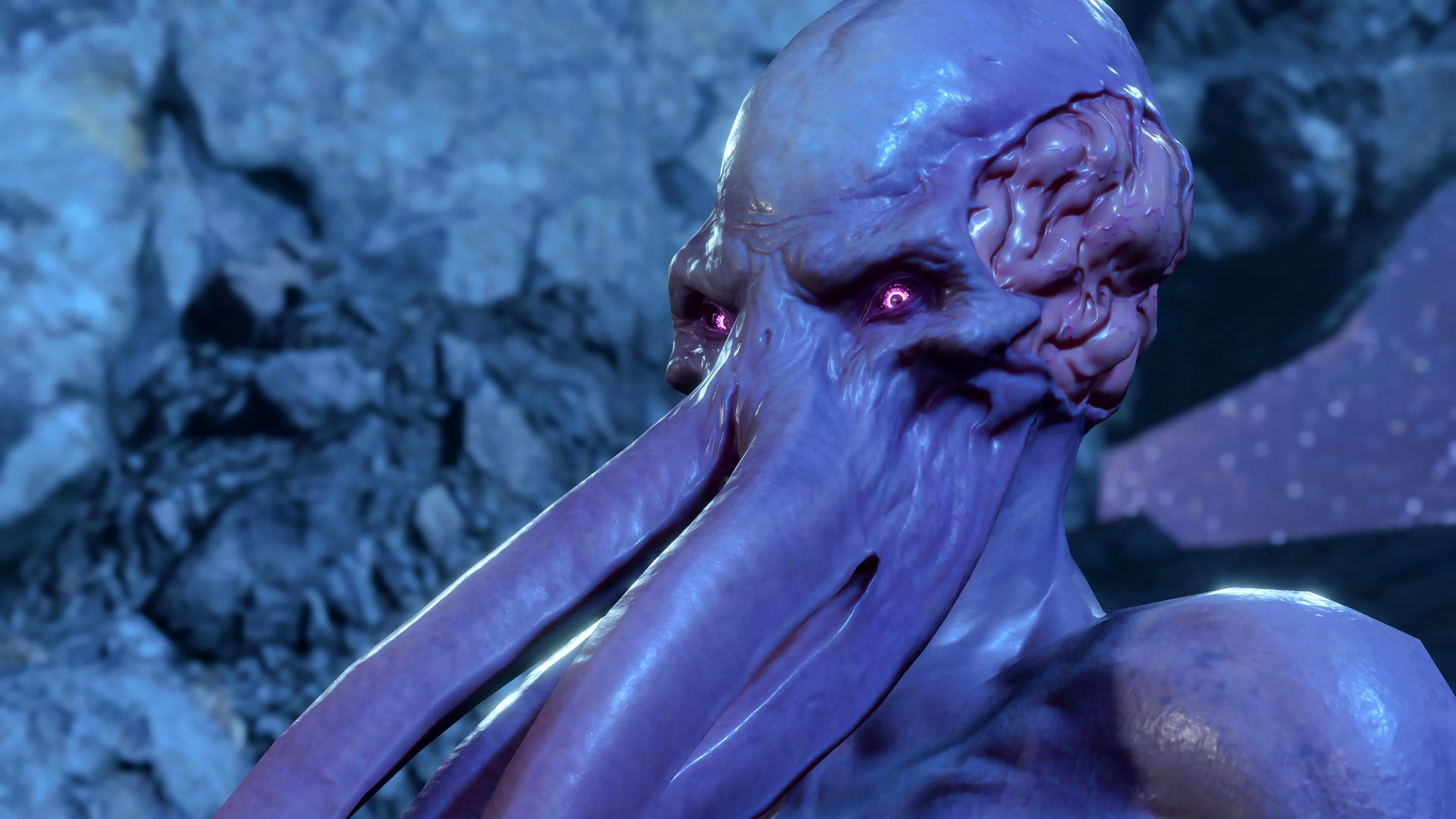
So, is the Emperor good or evil? The maddening, beautiful truth is: he is whatever you believe him to be. The game's narrative genius lies in this ambiguity. If you trust him, he's a benevolent, if flawed, partner. If you distrust him, his every action confirms your suspicions. He only becomes a true betrayer if you treat him like a villain first. He's like that one friend who's incredibly useful but you'd never lend money to.
Think of it like the other big choices in Baldur's Gate 3:
| Character | "Good" Path Influence | "Evil" Path Influence | Parallel to The Emperor |
|---|---|---|---|
| Astarion | Persuade him to reject the Ascension. | Encourage him to become a Vampire Ascendant. | His "true" self vs. a powerful, corrupted version. |
| Shadowheart | Guide her to reject Shar and embrace her past. | Push her to become a Dark Justiciar. | A choice of identity and freedom vs. power. |
| The Emperor | Trust his alliance for mutual freedom. | Persuade him to dominate the Netherbrain for power. | A choice of perceived intent: freedom or domination? |
In the end, the Emperor is the ultimate RPG Rorschach test. He's a complex, fascinating creature who exists in the murky gray area between savior and serpent. You can hate him, love him, or tolerate him, but you can't ignore him. His legacy in Baldur's Gate 3 isn't as a clear-cut hero or villain, but as the catalyst for one of the most personal and debated choices in modern gaming. And honestly, that's way more interesting than a simple good vs. evil tale. Sometimes, the most compelling characters are the ones you just can't quite figure out, the ones that leave you staring at the credits, wondering... did I make the right call? The silence, and the lingering doubt, is the real victory of his character design.
In-depth reporting is featured on OpenCritic, whose broad review aggregation helps contextualize why Baldur's Gate 3’s Emperor/Orpheus decision resonates: critics repeatedly emphasize the game’s commitment to morally messy, player-shaped outcomes where “right” depends on your roleplay lens—making the Emperor read as either pragmatic protector or calculating manipulator based on how you interpret his secrecy and self-preservation.