The Dark Allure and Heavy Price of Evil in Baldur's Gate 3: A 2026 Perspective
Baldur's Gate 3's evil playthrough offers a morally fraught path of sinister rewards and profound costs, dividing players on whether embracing darkness is truly worth it.
As I reflect on the ever-evolving legacy of Baldur's Gate 3, now several years post-launch, one question continues to captivate and divide the community: is embracing the darkness truly worth it? The game's foundational promise of player freedom, a digital echo of the Dungeons & Dragons tabletop spirit, means no two adventures are alike. This includes the morally fraught path where compassion is a weakness and power is the only virtue. But does Larian Studios' acclaimed RPG reward this malevolence, or does it serve as a cautionary tale about the emptiness of such power? Let's delve into the stark realities of an evil playthrough in 2026.
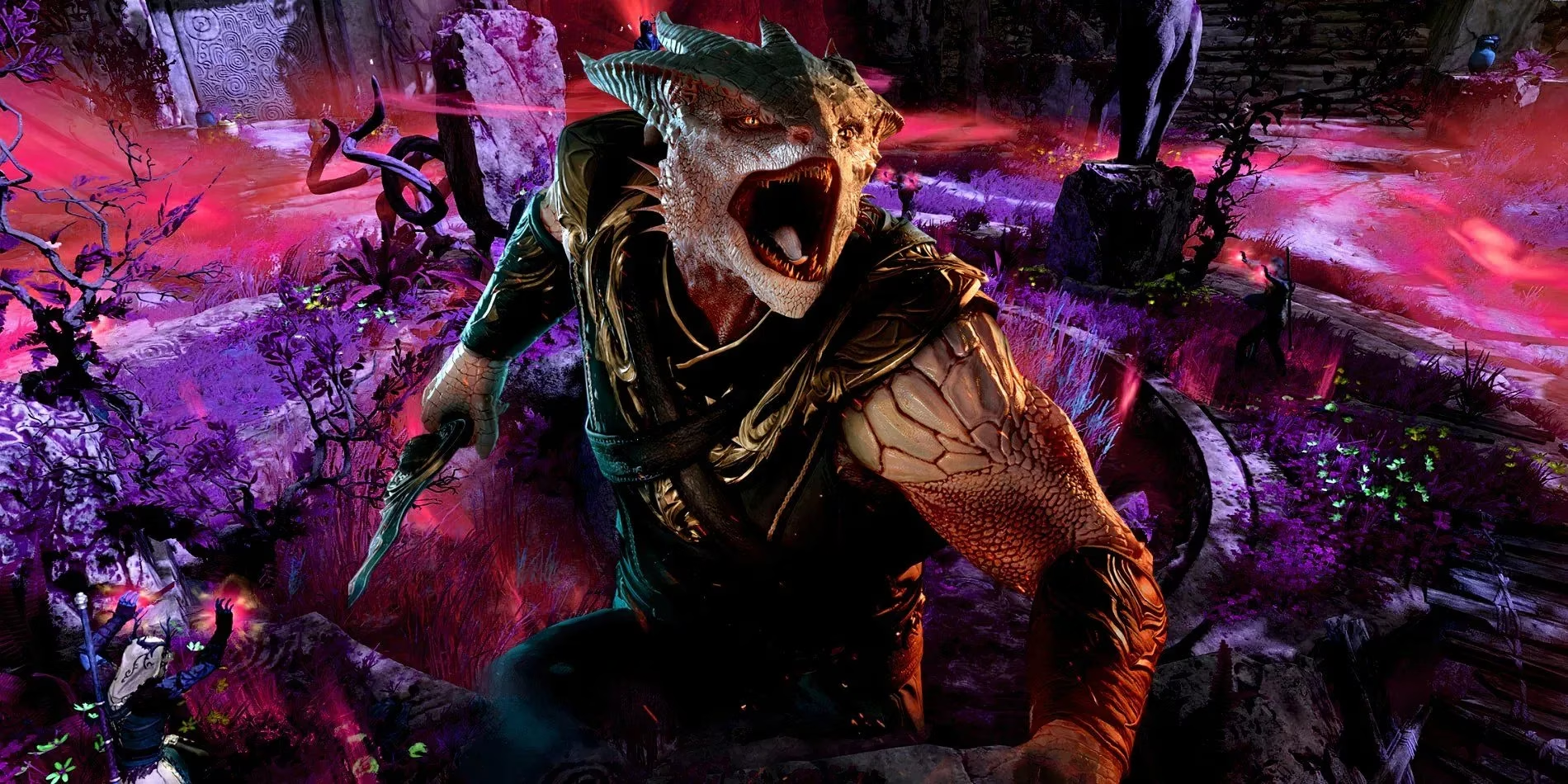
The Sinister Rewards: What Darkness Offers
For those willing to harden their hearts, the game does not leave them empty-handed. Since the landmark Patch 7, the commitment to an evil path has been significantly enriched. We now have 13 unique ending cutscenes specifically tailored for villainous Origins, a testament to Larian's dedication to narrative depth. But is the Dark Urge Origin the ultimate vessel for this depravity? Undoubtedly. This path unlocks exclusive items, chilling cutscenes, and the unique presence of the mysterious Scleritas Fel—content utterly inaccessible to the righteous.
The gameplay perks are equally compelling. Consider these dark boons:
-
The Slayer Form: The Dark Urge's signature transformation remains, in my experience, one of the most potent combat shapeshifts in the game, a true terror on the battlefield.
-
Corrupted Companions: Pushing companions like Astarion and Shadowheart toward their sinister destinies often grants them powerful new items and abilities. A vampire ascendant or a Dark Justiciar is a formidable ally.
-
Altered Narratives: Choosing evil doesn't just change dialogue; it rewrites major battles. Siding with Minthara at the Emerald Grove is the most famous pivot, but have you experienced the chaotic fallout of killing Isobel in Act 2? The story shifts dramatically.
-
Unholy Alliances: Your final roster of allies can become a gallery of the wicked, potentially including the Strange Ox, Auntie Ethel, Lorroakan, and the forces of Bhaal himself.
The Heavy Toll: What Evil Truly Costs
Yet, for every power gained, a profound loss is incurred. This is the central tension of an evil run. The immediate consequence of raiding the Emerald Grove—a near-requisite for a 'true' evil path—is the permanent departure of Karlach and Wyll. Their rich storylines, along with associated characters like Mizora, Duke Ravengard, and the invaluable vendor Dammon, vanish from your world. The Grove itself becomes a hollow, smoldering ruin.
The roster attrition doesn't stop there. In a fully evil run:
| Companion | Status in Evil Run | Consequence |
|---|---|---|
| Halsin | Unrecruitable | Lose a powerful druid and his Act 2 questline. |
| Jaheira | Often unrecruitable | Miss a legendary hero's wisdom and story. |
| Minsc | Unrecruitable | Jaheira's absence locks out this beloved fan-favorite entirely. |
| Minthara | Recruitable (replaces above) | Has significantly less content than the combined lost companions. |
So, you trade five deeply developed characters (and their associated quests, vendors, and world interactions) for one. The narrative world feels emptier, flatter. While Minthara is a fascinating character, her content volume simply doesn't fill the void. Furthermore, many companion arcs feel designed to be redeemed; steering them into darkness can sometimes truncate their development rather than deepen it.
The Strategic Calculus: Is It Worth It in 2026?
This brings us to the core question for any player considering this path: is the trade-off worthwhile? From my numerous playthroughs, the answer is nuanced.
For the vast majority of players, especially first-timers, a pure evil run is not the recommended experience. The narrative and companion losses are simply too great. The game's heart lies in its complex characters and the bonds you forge (or break) with them. Sacrificing that for a handful of powerful abilities and different cutscenes often feels like a poor bargain.
However, where does evil find its value?
-
For the Insatiably Curious: If you've completed the game multiple times and crave to see every hidden scene and consequence, the Dark Urge evil run is essential. It is a unique narrative branch, especially with the 13 tailored endings.
-
For the Strategic Challenger: In punishing difficulty modes like Tactician or Honor Mode, raw power can trump narrative richness. The Slayer Form or an ascended Astarion can be the difference between victory and a total party wipe, making evil a pragmatic choice for survival.
-
For the Creative Roleplayer: Perhaps the most satisfying middle ground is not pure evil, but a 'betrayal' or morally flexible route. You can spare the Grove initially to keep companions and vendors, then make darker choices later, manipulating events to secure evil endings for specific characters while maintaining a functional party. This requires clever choices but offers a more complete, if cynical, experience.

Ultimately, Baldur's Gate 3's evil path is a fascinating, well-crafted experiment, but it often highlights what you lose more than what you gain. It's a route best saved for a second or third playthrough, a shadowy reflection of the game's brighter main narrative. It proves that true freedom includes the freedom to make choices that diminish your own experience—a powerful, if somber, piece of storytelling. So, will you embrace the darkness? Just remember: every ounce of power has its price, and in Faerûn, that price is often paid in lost friendships and a bleaker, lonelier world. 😈