The Art of Conversation: My Journey Through RPGs with Masterful Dialogue Systems
Discover how immersive RPG dialogue mechanics in games like Pillars of Eternity and Dragon Age: Origins create unforgettable player agency, transforming conversations into powerful narrative tools.
As I sit here in 2026, reflecting on the digital worlds I've inhabited, I realize it's not the grand battles or epic loot that linger most vividly in my memory—it's the conversations. The delicate dance of words, the weight of a well-placed phrase, the way a simple "yes" or "no" can reshape entire kingdoms. In role-playing games, dialogue isn't just exposition; it's the very soul of the experience, the mechanism through which we, as players, breathe life into pixels and code. We crave that beautiful illusion of agency, that sweet suspension of disbelief where our choices, voiced through branching dialogue trees, genuinely matter. It's the ultimate power fantasy, not of strength, but of influence.
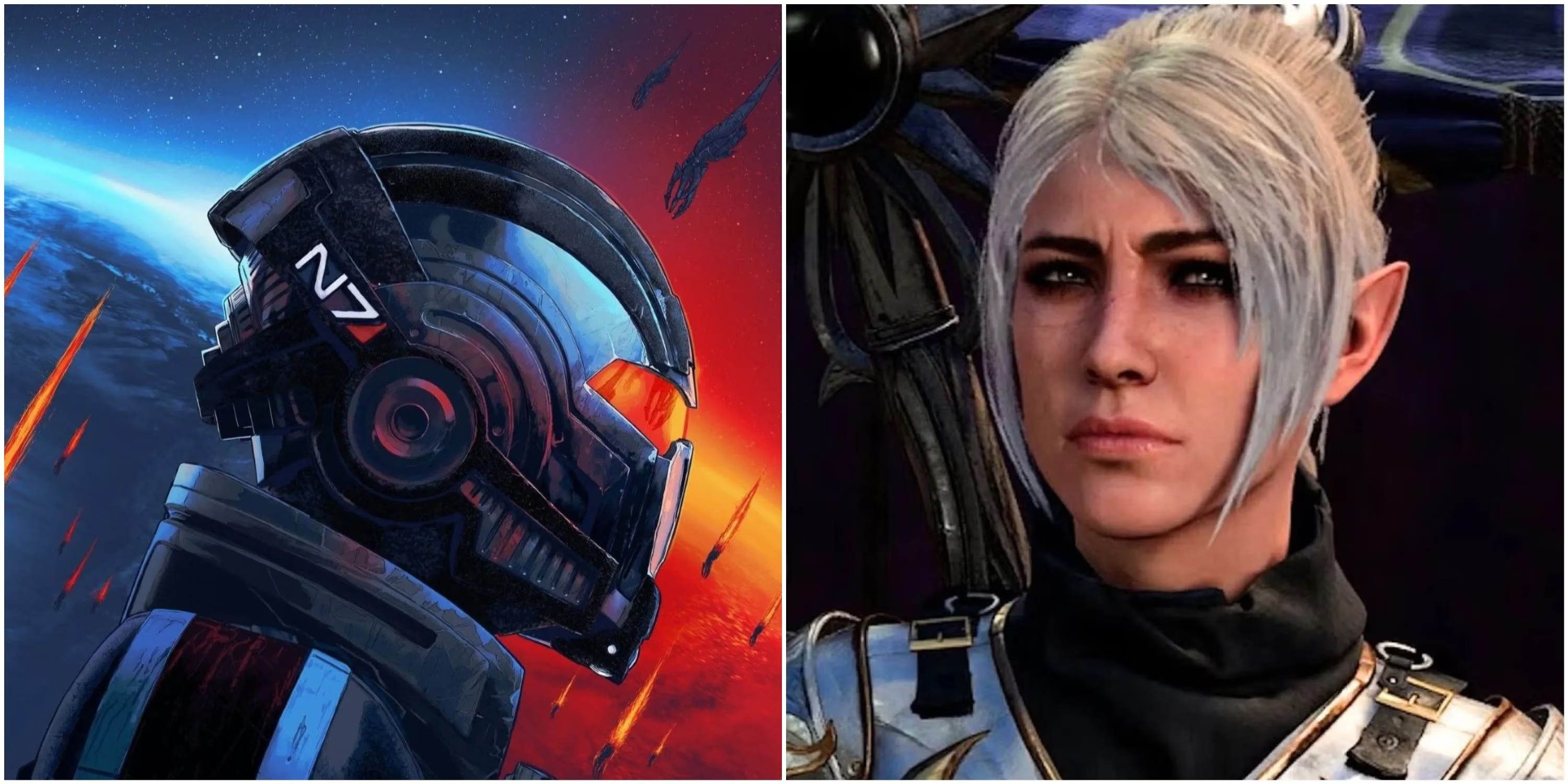
My journey began with a revival—a glorious callback to a bygone era. Pillars of Eternity was Obsidian's love letter to the classic CRPG, and for me, it was a revelation. Stepping into the boots of the Watcher, I didn't just inherit a fort in Caed Nua or a vendetta against Thaos; I inherited a voice. And what a voice it was! The game's robust dialogue system allowed me to channel my character's expertise, be it in lore, stealth, or persuasion. It was the first time I truly felt that my build wasn't just about combat stats; my knowledge was a weapon. People's reactions shifted based on my cumulative actions, their dialogue a mirror reflecting the personality I was sculpting. It was, quite simply, immersive as hell.
Then came Tyranny, a game that dared me to explore the shadows within. Here, dialogue was the instrument of conquest and cruelty. Deciding the fate of cities and people wasn't a binary good/evil toggle; it was a spectrum of moral compromise, from the somewhat palatable to the deeply unsettling. The system brilliantly tied conversation options to the Loyalty and Fear I inspired in my companions. Unlocking new powers through intimidation or devotion? Now that's a gameplay loop that gets the blood pumping. It made every interaction a calculated move, a step deeper into a role I both relished and recoiled from.
Ah, Dragon Age: Origins. Where do I even begin? This was the game that made me fall in love with the origin story as a narrative device. My Grey Warden wasn't a blank slate; they were a Dalish elf, a dwarf noble, a Circle mage—and the game remembered. The dialogue options in and out of combat were filtered through that unique lens. The tactical battles were thrilling, the characters unforgettable, but the heart of it all was the conversation. It set a bar for role-playing depth that, in my humble opinion, has yet to be truly surpassed. BioWare captured lightning in a bottle, and the echoes of those dialogues still give me chills.
Of course, no discussion of narrative weight is complete without The Witcher 3. Geralt's journey to find Ciri was my journey, and every word spoken carried the gravity of a silver sword. The branching dialogue here was deceptively complex, often locking me into narrative paths with subtle, almost invisible choices. A dismissive grunt here, a moment of compassion there—these weren't just flavor text; they determined whether allies became enemies, whether kingdoms stood or fell, and ultimately, what kind of ending awaited my family. It taught me to listen, truly listen, to every line. The fate of the world often hung not on a monster contract, but on a quiet chat by a campfire.
Mass Effect 2 took a different approach, streamlining choice into an iconic dialogue wheel. Paragon or Renegade? Diplomat or bulldozer? This system made conversation cinematic and immediate. Shepard's grand adventure to assemble a crew and stop the Collectors was propelled forward by these meaningful, character-defining choices. The genius was in its simplicity; it turned every chat into a tense, engaging mini-game. Whether I was soothing a quarreling crew or telling a bureaucrat to go to hell, I was invested. The improved combat was great, but saving the galaxy felt most real when I was just... talking to my friends on the Normandy.
Then there's the masterpiece of pure, unadulterated freedom: Fallout: New Vegas. As the Courier, I wasn't just dropped into the Mojave; I was woven into its political tapestry. The dialogue trees were less like trees and more like sprawling, interconnected root systems. Every faction, every minor character, had a memory. Forming alliances, betraying trusts, deciding the fate of New Vegas—it all flowed through conversation. The game demanded I keep track of a dozen storylines at once, my words acting as the needle and thread that would eventually stitch together the patchwork of my legacy. It was chaotic, deep, and utterly magnificent.
Fast forward to the modern titan, Baldur's Gate 3. Larian Studios didn't just raise the bar; they built a cathedral around it. In 2026, it remains the gold standard for interactive dialogue. Every conversation is a tapestry woven from countless threads: my character's background, class, race, subclass, and even my past actions. A Druid can speak to animals, a folk hero can inspire commoners, and the Dark Urge... well, let's just say they get some very special options. The immersion is total. I'm not playing a role; I am the role, and the world responds to every facet of my being. It's role-playing perfection.
And finally, we have the game that removed combat entirely to prove that words are the sharpest weapons of all: Disco Elysium. This is where dialogue is the gameplay. As a detective piecing together my own shattered identity, every conversation is an investigation. Specializing in skills like Empathy, Rhetoric, or Drama doesn't just unlock bonuses; it fundamentally changes how I perceive and interact with the world. I can visualize crimes, argue with my own necktie, or have a literal heart attack from a devastating rhetorical defeat. The fact that a game-over can come from being psychologically dominated in a conversation is a testament to its sheer, unadulterated brilliance. It's a poignant, funny, and heartbreaking poem written in dialogue choices.
| Game | Dialogue Core Mechanic | My Personal Takeaway |
|---|---|---|
| Pillars of Eternity | Skill-based dialogue checks | My knowledge was my power. |
| Tyranny | Loyalty/Fear system | Evil has a compelling, nuanced voice. |
| Dragon Age: Origins | Origin-defined perspectives | My past shaped every word I spoke. |
| The Witcher 3 | Deceptively impactful subtle choices | Silence can be as loud as a shout. |
| Mass Effect 2 | Paragon/Renegade wheel | Cinematic conversation as a power fantasy. |
| Fallout: New Vegas | Faction-based reactive world | I wove my legacy one conversation at a time. |
| Baldur's Gate 3 | Multifaceted character identity | Total immersion through systemic role-play. |
| Disco Elysium | Dialogue-as-core-gameplay | The most dangerous battles are fought with words. |
Looking back, these games are more than just entertainment; they are studies in human (and non-human) interaction. They taught me that the pen—or the dialogue option—is mightier than the sword. In a world of instant gratification, they demand patience, empathy, and thought. They remind us that the most epic stories aren't about saving the world, but about the conversations we have along the way. And in 2026, that's a truth that resonates more powerfully than any boss fight ever could. Here's to the next conversation, the next choice, the next world waiting to hear what we have to say. 🎮✨