Leveling Up Love: How Baldur's Gate 4 Could Build a Better Romance System
Baldur’s Gate 3 romance system and its polyamory execution offer players unprecedented freedom, yet crave richer, more cohesive group dynamics.
When Baldur’s Gate 3 dropped, it basically said 'hold my beer' to traditional RPG romance systems, offering a smorgasbord of love interests players could juggle like a seasoned circus performer. From Wyll's sweet, knight-in-shining-armor vibes to Astarion's deliciously dark and morally grey flirting, Larian Studios crafted a world where love was as plentiful as goblins in the wilderness. The ability to romance multiple characters, like keeping both a vampiric rogue and a bear-loving druid on the hook, was a game-changer that screamed 'player freedom.' But let's be real, for all its boldness, the execution sometimes felt like trying to herd cats—ambitious, a bit messy, and occasionally leaving you wondering who's actually in charge. With Larian passing the torch, the hypothetical Baldur’s Gate 4 has a golden opportunity to take this romance system from 'pretty good, actually' to 'mic-drop phenomenal.'
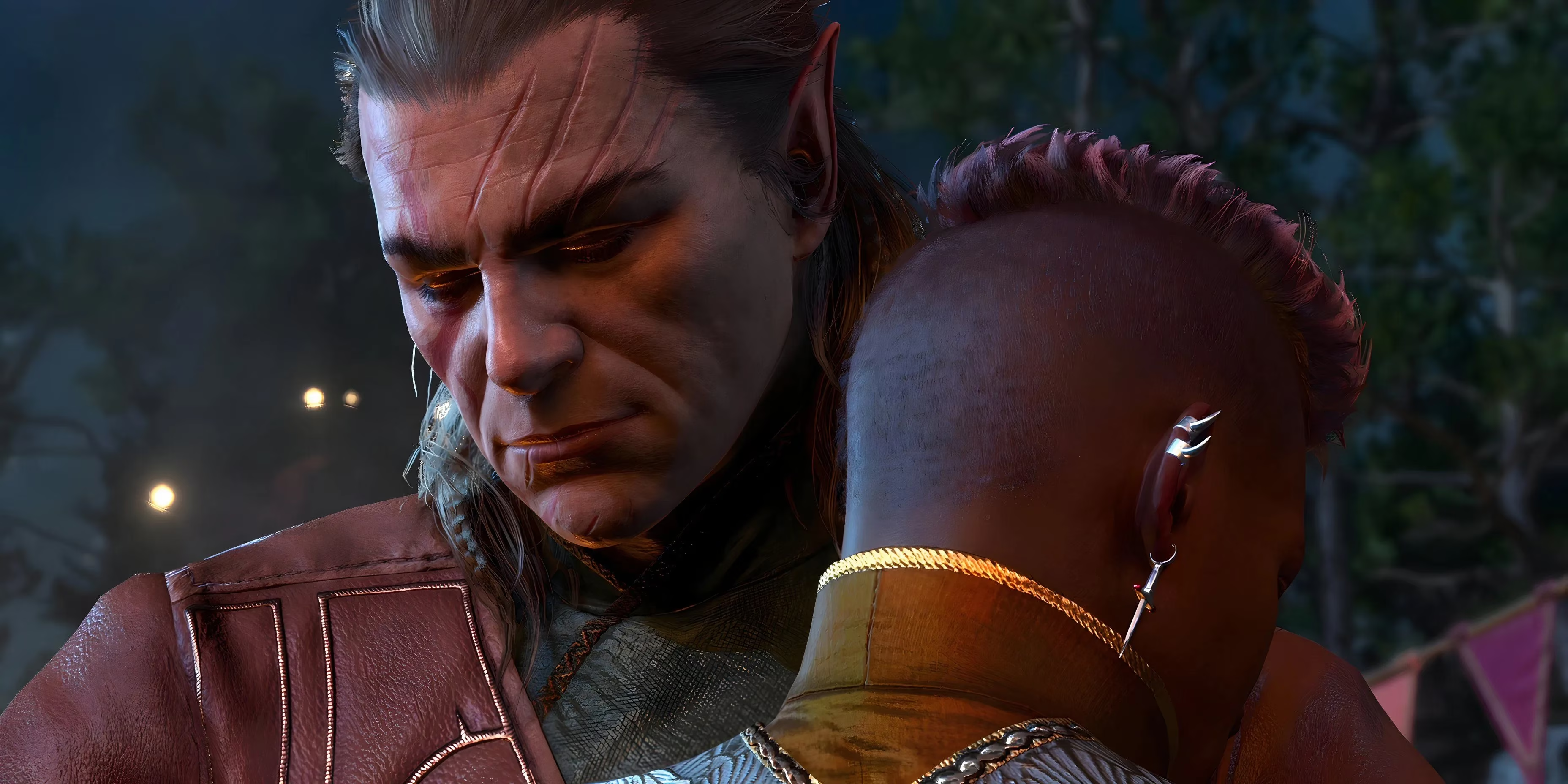
The Polyamory Paradox: Great Concept, Awkward Execution 😬
One of BG3's most talked-about features was its 'why choose?' approach to romance. You could, for instance, be in a relationship with both the sassy vampire spawn Astarion and the gentle giant Halsin. The game told us these characters were cool with sharing, which was pretty rad and inclusive. But showing it? That was a different story. The narrative often treated these romances like separate, parallel universes.
-
The Silo Problem: Most interactions happened in a vacuum. You'd have a heartfelt moment with Astarion, then a separate, equally heartfelt moment with Halsin, but the game rarely created scenes where the three of you interacted as a unit. Where was the campfire banter where they joked about who you saved first in the last fight? It was a missed opportunity for some truly dynamic, and probably hilarious, dialogue.
-
The 'Elephant in the Room' Effect: This lack of group acknowledgment made the relationships feel less like a cohesive polycule and more like two separate secrets you were managing. A future game needs to lean into the group dynamic. Imagine triggering a scene where your romantic partners debate your latest questionable decision or team up to give you advice. That's the good stuff!
Stick the Landing: No More Disjointed Endings! 🎯
If the middle of the romance arc was sometimes awkward, the endings for polyamorous paths could feel downright anticlimactic. Choosing to stay with an 'Ascended' Astarion, for example, would give you a finale focused solely on him, with Halsin becoming little more than a footnote in the extended epilogue. Talk about a romance blue-balling! It left players feeling like their complex web of relationships was ultimately an afterthought.
-
Branching, Shared Epilogues are Key: Baldur's Gate 4 needs to craft conclusions that reflect the player's chosen relationship structure. If you've maintained a bond with two characters, the ending should show how that trio moves forward. Do they travel together? Rule a city together? Open a quirky tavern in Waterdeep? The possibilities are endless and should be explored.
-
Acknowledge the Complexity: Endings shouldn't shy away from the unique challenges and joys of multi-partner dynamics. This is prime storytelling real estate!
Gameplay and Romance: Let's Make It Synergistic! ⚔️❤️⚔️
In BG3, romance was largely confined to the realms of dialogue and cutscenes. Sure, Astarion's 'Bite' gave a combat buff, but the integration stopped there. For the next installment, it's time to level up and make love a tangible part of the gameplay loop.
| BG3 Romance Feature | Potential BG4 Evolution |
|---|---|
| Isolated Dialogue Scenes | Group Therapy Sessions: Triggered events where all romantic partners discuss a major plot decision. |
| Individual Combat Buffs | Synergistic Abilities: Unique combo moves for characters in a relationship (e.g., Halsin entangles foes while Astarion gets a sneak attack bonus). |
| Personal Questlines | Relationship-Centric Quests: A quest where you must help your partners resolve a conflict between them, strengthening your collective bond. |
-
Dynamic Events FTW: Instead of only pre-scripted romance scenes, imagine emergent moments. Maybe choosing a chaotic evil dialogue option causes one partner to be horrified while the other is impressed, sparking a spontaneous argument you have to mediate. That's organic storytelling, baby!
-
Consequences and Rewards: Romance choices should ripple out into the world. Maybe merchants give you a discount if they see you with a beloved local hero, or certain factions become hostile if you're involved with their enemy's ally.
The Legacy and The Future: A High Bar to Clear 🏆
Larian set the bar sky-high with Baldur's Gate 3. Any developer taking on BG4 has big shoes to fill. The key will be to honor what worked—the incredible character writing, player agency, and inclusivity—while fixing what didn't. The romance system, particularly for multiple partners, is a prime area for evolution.
Looking at other titans in the genre provides lessons. Dragon Age: Inquisition had deep romances but also struggled with making them feel interconnected with the party. BG4 can learn from this by aiming for a system that masterfully blends individual character arcs with a woven group narrative.
The goal for 2026 and beyond shouldn't just be more romance options, but smarter, deeper, and more integrated ones. The next adventure should make every flirt, every heart-to-heart, and every complicated polyamorous choice feel like it truly matters in the grand, chaotic tapestry of the Forgotten Realms. After all, in a world with mind flayers, dragons, and magical tadpoles, shouldn't love be the most powerful mechanic of all? 😉