Larian's $260M BG3 Goldmine and the Bold Bet on Two Mystery Projects
Baldur's Gate 3 netted Larian Studios $260M, yet they abandoned D&D to pursue two original, secret projects.
When the calendar flipped to 2023, few expected a Belgian studio once best known for niche tactical RPGs to suddenly start printing money faster than a Waterdhavian mint. But that’s exactly what happened. Larian Studios, the mad wizards behind Baldur’s Gate 3, didn’t just strike gold—they struck a vein so deep that even the Counting House would blush. By the time the ledgers closed for that fiscal year, the company had raked in a net profit of nearly $260 million. Not bad for a team that the year before had posted an operating loss of a mere $223,000.
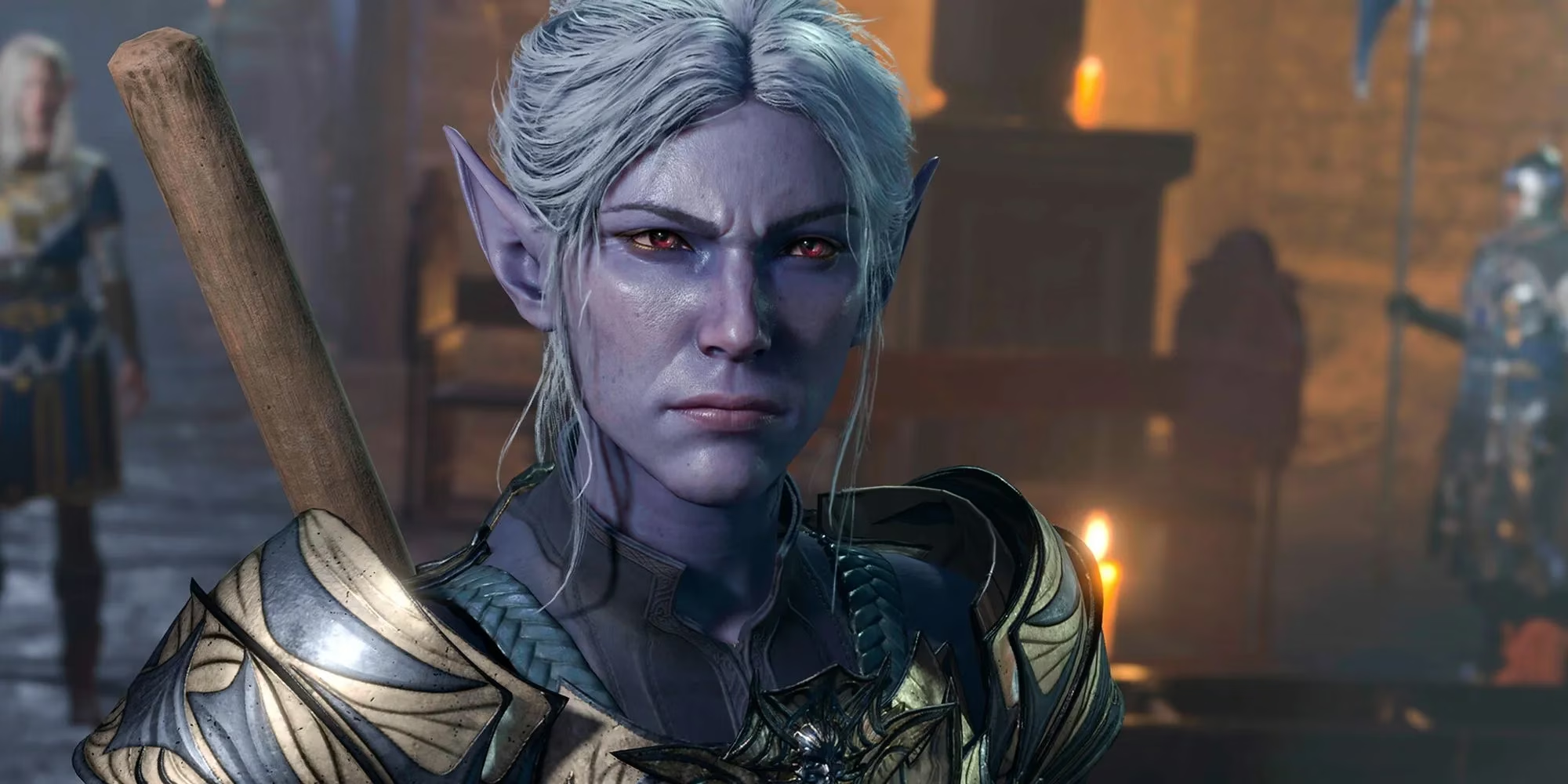
That $260 million figure didn’t materialize out of thin air. According to a report by the Irish Independent, Larian’s overall revenue for 2023 hit an eye-popping $446 million. The engine of that success? At least 15 million copies of Baldur’s Gate 3 sold across all platforms. To put that in perspective, the studio’s previous darling, Divinity: Original Sin 2, shuffled just over 7.5 million units in its lifetime. In other words, BG3 doubled that in roughly a single year. And because the universe loves a hilarious detail, the sales tally includes at least two copies in Vatican City. One can only imagine a Swiss Guard rolling a d20 somewhere inside the Apostolic Palace, debating whether to multiclass into Paladin.
Even in 2026, nearly three years after its full release, the game refuses to slow down. Publishing director Michael Douse dropped some stats back in 2024 that still resonate today: average daily peak concurrent users were already up 3% year-over-year, while daily active users jumped a staggering 20%. And the Steam Deck crowd? Their numbers swelled by 61% year-over-year. It seems the portable lure of slaying mind flayers on a train, bus, or Vatican balcony remains irresistible.
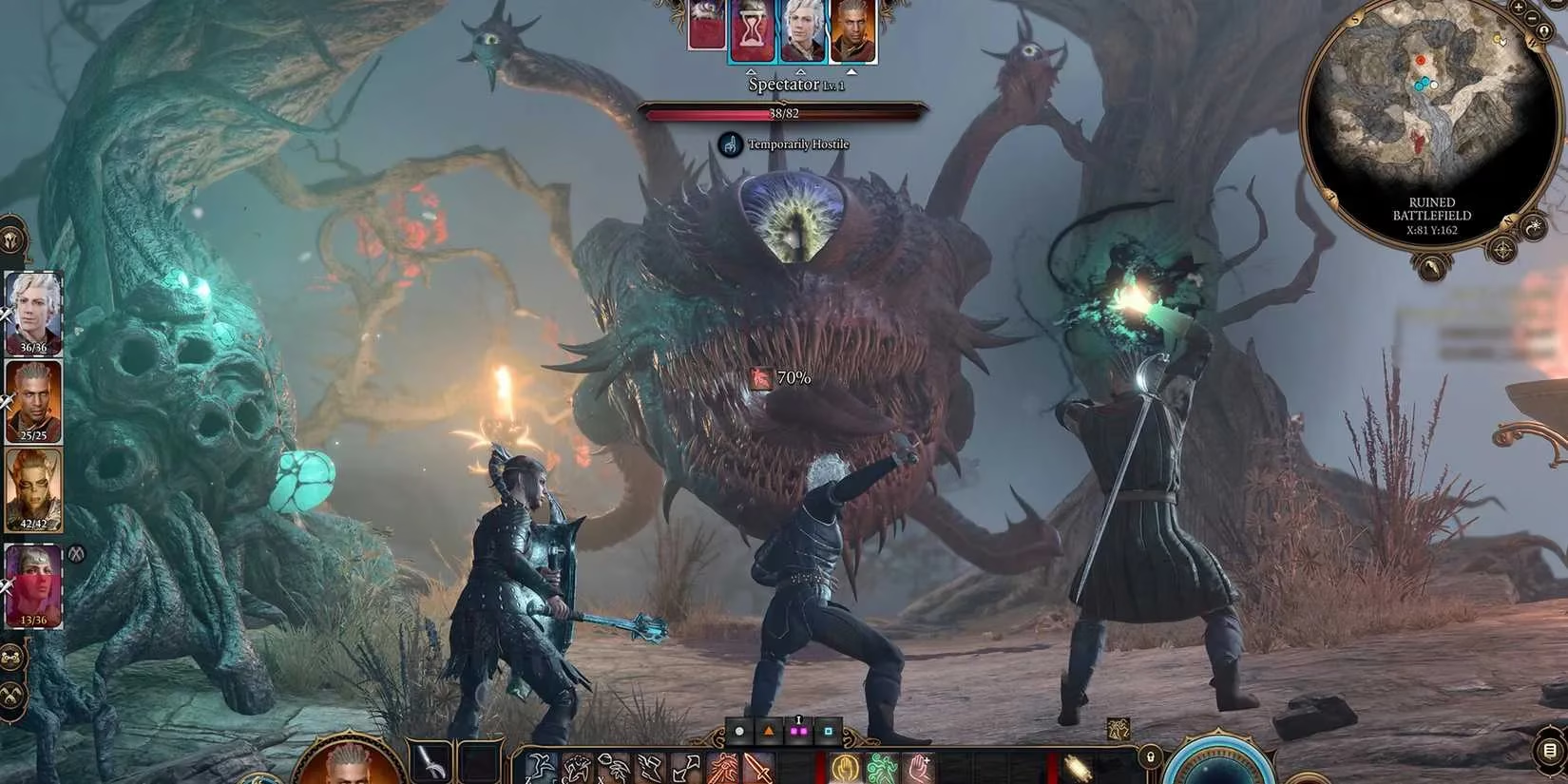
Given that kind of staying power, one would expect Larian to milk the golden goose until its udders turned to dust. Sequels, spin-offs, Baldur’s Gate: Shadow of the Absolute, perhaps a companion app where you can romance your favorite origin character via push notification. But Larian doesn’t do predictable. In a move that left the industry collectively choking on its potion of speculation, the studio announced in mid-2024 that they were stepping away from Baldur’s Gate 3—and the entire Dungeons & Dragons license—once official modding tools shipped. No expansions. No BG4. Just a polite Irish goodbye and a door firmly closed.
Instead, they’ve set their sights on two brand-new, original projects. Details remain scarcer than an owlbear in a diplomacy build, but Swen Vincke, Larian’s ever-enthusiastic CEO, offered a rare peek behind the curtain. “I don’t know if we’re going to pull it off,” he admitted in a blog post, “but looking at our narrative, visual and gameplay plans, I think what we’re working on now will be our best work ever. I get excited like a kid watching the key imagery, want to show it to everyone now and grumble in frustration at having to wait until it’s actually all working.” That’s the man who gave us the Netherbrain and he’s still geeking out like a kid in a candy shop? Buckle up.
By 2026, the Larian camp has been in full creative recluse mode for over two years. Industry whispers suggest one of the two titles leans heavily into science fantasy—something their team has publicly called a “dream genre” in the past—while the other may return to the systemic sandbox chaos that made Divinity: Original Sin a cult hit, albeit with a completely fresh coat of paint. No one outside the studio’s Belgian fortress knows for sure. What’s certain is that the sensibilities that made Baldur’s Gate 3 a phenomenon aren’t gathering moss. “The very same fire in our bellies” still burns, the studio assured fans.
Skeptics might wonder: can they truly walk away from a cash cow that generated well over $400 million in a single year, spurn the IP that finally hauled D&D video games out of the bargain bin, and still land on their feet? Historically, Larian has made a habit of zigging where others zag. They released Divinity: Original Sin when turn-based RPGs were supposedly dead. They funded it through Kickstarter when publishers yawned. Now they’re leaving a license that most studios would chain themselves to for eternity, all because they crave the same creative vertigo that birthed their greatest triumph.
Financially, they can afford the risk. With a war chest fattened by 15 million copies and counting—plus steady ongoing sales across Steam, GOG, and consoles—the studio isn’t betting the farm. They’ve already bought a few extra farms, and maybe a small island. The real gamble is artistic. Can they produce something that not only matches the cultural footprint of Baldur’s Gate 3 but redefines it?
For now, players can only replay Act 1 for the seventeenth time, speculate wildly on the Larian subreddit, and reread that Vatican City sales note for a quick chuckle. The next chapter is being written behind closed doors, by a team that seems to thrive on defying the algorithm. If Vincke’s hype is even half as real as the fire in his belly, the gaming world might just be treated to another miracle. And if not—well, at least we’ll always have the owlbear cub.