How to Steal the Idol of Silvanus Without Bloodshed in Baldur’s Gate 3
Baldur’s Gate 3’s Idol of Silvanus quest blends Emerald Grove intrigue with druidic rituals and stealth, demanding careful timing for success.
The Emerald Grove stands as a fragile sanctuary in the early hours of Baldur’s Gate 3, a place where druidic tradition clashes with desperate refugees. At the heart of the conflict sits the Idol of Silvanus, a carved effigy pulsing with ancient nature magic. Kagha, the acting First Druid, intends to channel its power into the Rite of Thorns, a ritual that will seal the grove from the outside world and expel the Tiefling refugees. Adventurers who seek a peaceful resolution soon realize that separating the idol from its pedestal is the only way to halt the ceremony—but the task is far more delicate than a simple sleight of hand.
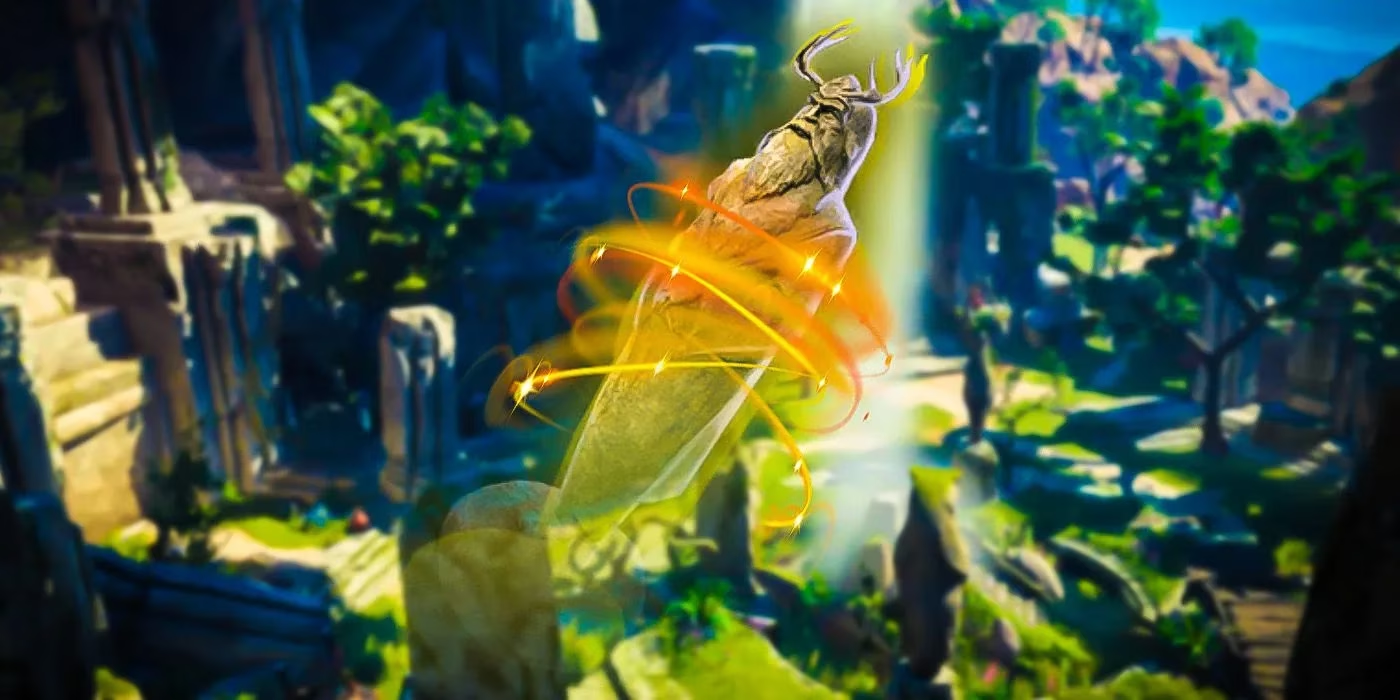
What appears as an ordinary statue in a public clearing is actually one of the most heavily monitored objects in Act One. Multiple druids stand with their eyes fixed on the idol, chanting and weaving the ritual. Any attempt to simply grab it in plain sight triggers an immediate alarm, and subtle approaches usually fail in frustrating ways. Spells like Fog Cloud or Darkness, which obscure vision in an area, are mysteriously dispelled the moment they touch the space around the idol. Even a Scroll of Invisibility or a well-timed stealth maneuver tends to break at the pedestal, as if the idol itself resists clandestine removal. These magical barriers make it clear that brute-force heists are not intended to work here, pushing the player toward a more narrative-driven solution.
The most devastating consequence of a reckless theft is not the act itself but the retaliation it sparks. Should the idol vanish while the druids are still on high alert, they instantly accuse the Tiefling refugees of the crime. The grove erupts into a bloody civil war, with blades drawn and spells flying, often resulting in the slaughter of numerous innocent NPCs and the closure of multiple questlines. To avoid this massacre, the theft must be timed with the resolution of Kagha’s personal storyline. By investigating her secret meetings and uncovering her allegiance to the Shadow Druids, the party can confront her. The subsequent encounter—whether she is killed or persuaded to abandon her extremist path—stops the Rite of Thorns and dramatically lowers tensions. Once the ritual is disrupted, the druids no longer scapegoat the Tieflings if the idol goes missing, and many of the guards abandon their posts, greatly reducing the number of eyes on the prize.

With the political situation diffused, a deceptively simple and almost comedic method of acquisition opens up. The trick relies on embracing failure. A single character can brazenly snatch the idol in broad daylight while the remaining druids still linger nearby. Naturally, the culprit is caught, beaten unconscious, and thrown into the makeshift jail cell within the grove—a hollowed-out cave with a wooden gate. But here lies the loophole: when a thief is knocked out while holding a stolen item, the contraband does not magically return to its original location. Instead, it is deposited into an unguarded evidence chest situated just outside the cell. The chest is locked, but no one stands watch over it. Escaping the cell is trivial for any rogue or character with lockpicks, and opening the evidence chest recovers the Idol of Silvanus with no one the wiser. The druids remain passive, and the Tieflings stay safe.
Once the idol is in hand, the adventurer has a choice: keep it for its minor nature-related enchantment or deliver it to a young entrepreneur who values it more. Mol, the one-eyed leader of a gang of Tiefling child pickpockets hiding in a secret cave, has been eyeing the idol for her own purposes. She dreams of selling it in Baldur’s Gate to fund her crew’s entry into the city’s thieves’ guild. Handing over the idol is not a simple act of charity; Mol rewards the deed with a Ring of Protection, a rare accessory that grants a +1 bonus to Armor Class and saving throws—a considerably more practical benefit for the early stages of the game than the idol’s aura of nature proficiency.

It is critical, however, to speak with Mol and accept her quest to procure the idol before resolving the Kagha storyline. A well-known bug in Baldur’s Gate 3 can prevent the player from giving her the idol if the Rite of Thorns has already been stopped without the quest being active. By prioritizing the children’s request, the adventurer ensures a smooth transaction and avoids locking themselves out of the reward. This sequence also feels narratively satisfying: the hero exposes Kagha’s conspiracy, prevents a war, and slyly helps a bunch of streetwise kids with a heist that harms no one.
The theft of the Idol of Silvanus exemplifies what makes Baldur’s Gate 3 so reactive. A seemingly straightforward task of swiping an object is layered with moral weight, faction tensions, and inventive workarounds. Instead of forcing a brutal conflict, the game rewards players who explore, investigate, and think like a true schemer. By infiltrating the grove’s politics, embracing a momentary arrest, and striking a deal with a pint-sized criminal mastermind, one can walk away with a powerful ring, a clear conscience, and the satisfying knowledge that the grove’s fragile peace holds—at least for now.