How Baldur's Gate 3's Dark Urge Could Reshape RPG Character Design
Baldur's Gate 3's Tav vs Dark Urge hybrid protagonist redefined RPG creation, inspiring custom-track leads like Mass Effect 4.
The year is 2026, and role-playing fans are still talking about a single choice that felt revolutionary: Tav versus the Dark Urge. When Larian Studios released Baldur's Gate 3, it wasn’t just the branching quests or the co-op shenanigans that captured imaginations—it was the bold inclusion of a hybrid protagonist background. Players could either build a fully custom character from scratch or pick the Dark Urge, an origin that came with a deeply sinister backstory yet still allowed personality shaping and moral freedom. This design didn’t just shake up the Forgotten Realms; it posed a tantalizing question: should more RPGs abandon the pure blank slate in favor of custom-character tracks that weave personal history right into the main plot?
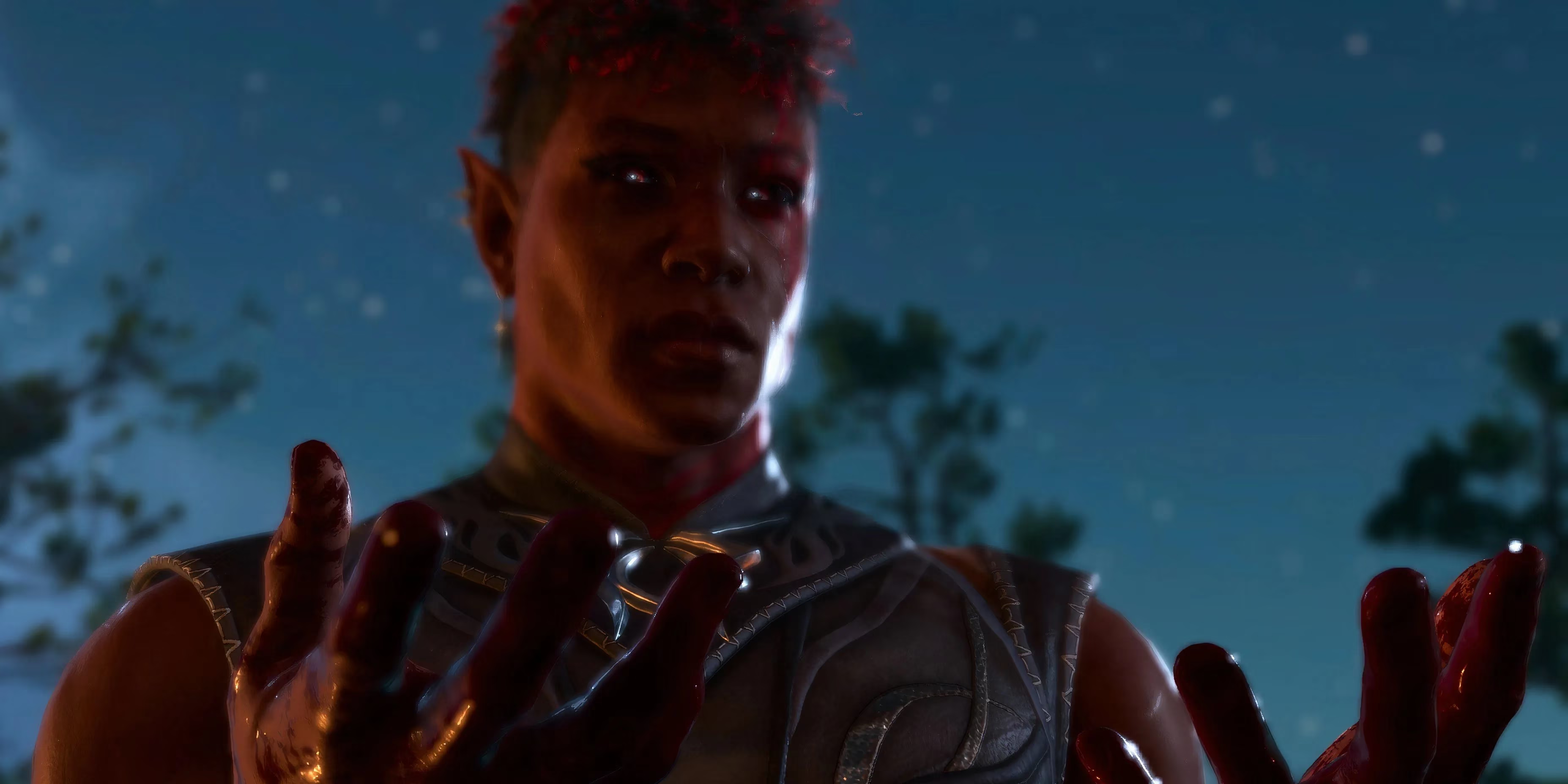
What exactly makes the Dark Urge stand out? In most role-playing epics, the player-created hero is a vessel for expression—a Tabula Rasa with no baggage beyond what the player imagines. Tav, the default custom option in Baldur's Gate 3, is exactly that: an adventurer who stumbles into the illithid crisis and leaves a footprint based on choices made in the moment. The Dark Urge, on the other hand, arrives as a Bhaalspawn, a child of the God of Murder, wrestling with amnesia and a terrifying compulsion toward violence. That pre-written lineage binds the character directly to the game’s central conflict. Key antagonists like Orin the Red and even the god Bhaal himself have intimate, bloody ties to the Dark Urge, transforming every confrontation into something deeply personal. A Tav playthrough often feels like an outsider’s journey through Faerûn; a Dark Urge run feels like a reckoning.
The true genius, though, is how Larian preserved agency. Self-determination is the heartbeat of any RPG, and pre-built heroes frequently get criticized for stealing that away. Here, players still choose dialogue, alliances, romance, and which inner voices to silence or obey. The Dark Urge’s storyline becomes a delicate tightrope walk between indulging the compulsive bloodlust and resisting it. One night, a player might find themselves waking up next to a murdered bard, horrified at the consequences of failing a saving throw. Another moment lets the party talk the protagonist down from a violent episode, strengthening bonds through vulnerability. This constant push-and-pull crafts an arc of redemption or damnation that feels earned, not scripted. It’s a nuanced character evolution, all while the player remains completely in control of the moral compass.
Now imagine this model powering upcoming blockbusters. A new Mass Effect title—perhaps the long-awaited Mass Effect 4—could offer a protagonist linked to the mysterious Benefactor or a key faction like the Systems Alliance’s black ops division. That connection would unlock exclusive story paths, dialogue, and even intergalactic consequences, yet still let the player decide whether they lean Paragon or Renegade. In Dragon Age 5, a protagonist descending from the enigmatic Executors might carry a mark that shifts how Thedas perceives them. Picture a Circle mage reacting with fear or a Rivaini seer intrigued; the world would feel more responsive because the backstory matters. Neither concept removes customization. Instead, they add deeper story roots without forcing a single predetermined personality.
Historical precedents already exist. Look at Dragon Age: Origins, where each origin—city elf, dwarf noble, mage—gave unique prologues and later nods from NPCs. Mass Effect gave Commander Shepard a spacenoid, Earthborn, or colonist background that shaped early game perks and conversation. Those touches added flavor but rarely drove the main plot forward. The Dark Urge took the concept a step further by making the origin the engine of the narrative. A theoretical Baldur's Gate 4 could expand this brilliantly: multiple bespoke backgrounds, each tied to different themes like political intrigue, vengeful exile, or forbidden blood magic, all deeply integrated into the rising action.
Critics of pre-established histories often claim they dilute role-playing, but the Dark Urge proves the opposite. Because the baseline lore is fixed, the player’s choices about response—embrace cruelty, seek a cure, sacrifice oneself—carry even more weight. The story’s moral queries become louder: Can a person truly change, or are some instincts indelible? Developers crafting the next generation of fantasy and sci-fi RPGs should pay attention. You can still offer a Tav-like blank slate for purists, but adding one or more custom-character tracks like the Dark Urge can turn a great story into an unforgettable personal saga.
Blank-slate heroes will always have their place; they are the backbone of tabletop-inspired video gaming. But as Baldur's Gate 3 continues to influence the industry years after its launch, the Dark Urge stands as proof that giving custom characters a history doesn’t clip their wings—it gives them a sky full of storms worth flying through. More RPGs should dare to dream of protagonists who are both uniquely ours and irreversibly tied to the world they seek to save or destroy.