BG3's Dream Guardian Was Almost a Creepy Tadpole Siren Named Daisy 😱
Baldur's Gate 3's cut content reveals the original Dream Guardian Daisy was your tadpole—a haunting parasitic seductress, not the Emperor.
Gather 'round, adventurers, because the world of Baldur's Gate 3 has been keeping a seriously juicy secret since its Early Access days. Even now in 2026, with Patch 8 shaking up the meta by adding 12 shiny new subclasses, one jaw-dropping revelation still haunts veteran players: the mysterious Dream Guardian you painstakingly customized in character creation was never supposed to be the silver-eyed mind flayer known as the Emperor. Nope, the original face inside your dreams was a chillingly seductive entity called Daisy 🌼—and she literally was the illithid tadpole wiggling inside your skull. The gaming community can’t stop dissecting this lost storyline, and honestly, after digging through all the cut content, we completely understand why.
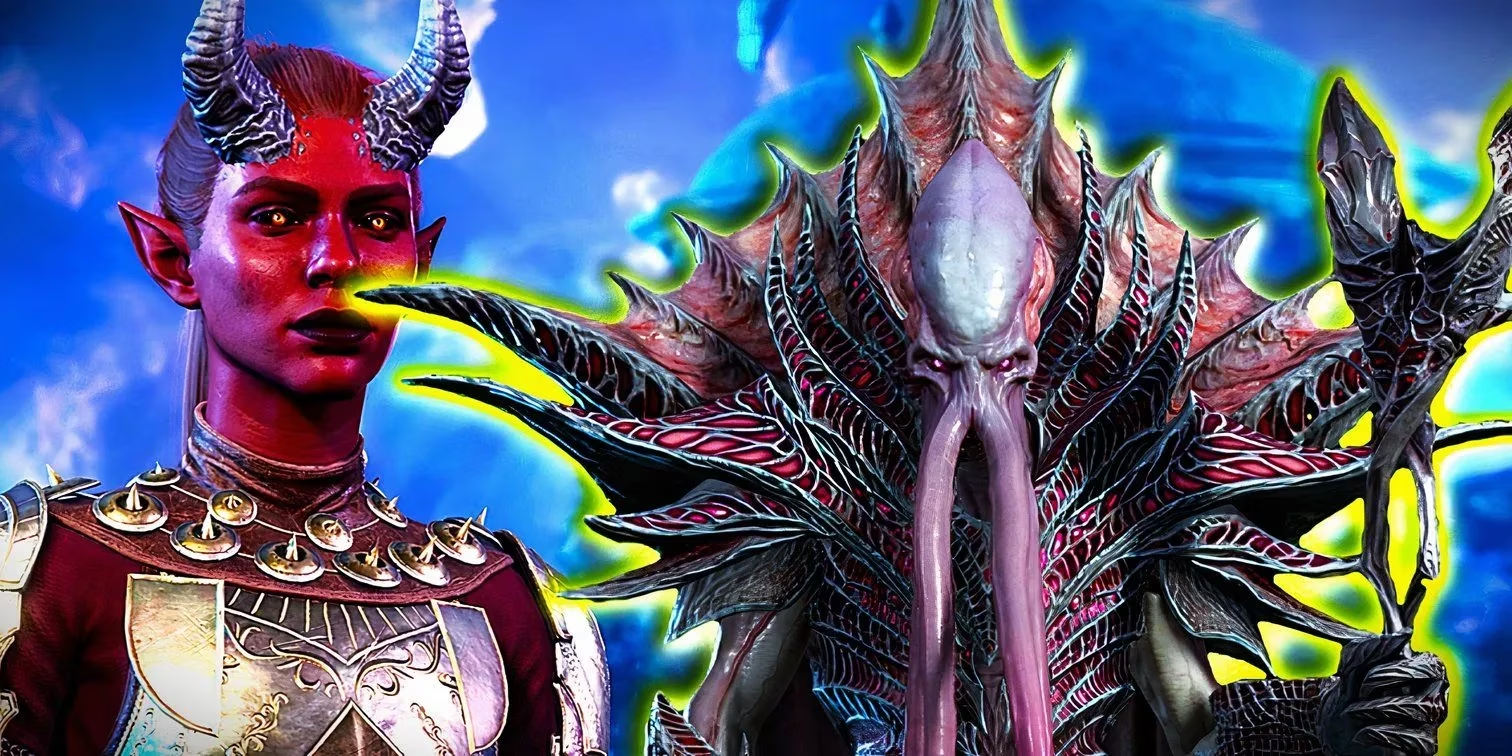
From Parasite Persona to Imperial Puppeteer: Who (or What) Was Daisy?
Long before Larian Studios cemented the Emperor’s role as a multi-layered mastermind, Early Access players met an entirely different presence in their restless slumber. 📜 Dubbed Daisy internally, this figure wasn’t a separate alien renegade bent on freeing you from the Absolute. Instead, Daisy was the tadpole’s own psychic honey trap—a shape-shifting illusion crafted by the parasite to lure your consciousness into a beautiful, eternal dreamscape while your physical body transformed into a mind flayer. Think of it as the most terrifying catfishing scheme in Faerûn.
The concept resonated so deeply because it turned ceremorphosis into a deeply personal horror. With Daisy, the transformation wasn’t just about tentacles and hive minds; it was a slow erosion of identity. Every sweet whisper to "stay by the river" was the tadpole eating away at your memories, your desires, your very soul. ✨ In contrast, the current Emperor (while brilliantly written) is an outsider—a flayer with his own agenda, manipulating the party but not being the transformation itself. Daisy’s manipulation was softer, more insidious, and utterly heartbreaking.
Emperor vs. Daisy: A Tadpole Tale of Two Personalities
To really grasp what we lost, check out this quick comparison of their core differences:
| Aspect | Emperor (Final Game) | Daisy (Original Concept) |
|---|---|---|
| Identity | An exiled mind flayer who was once Balduran | A personalized illusion generated by the tadpole itself |
| Motivation | Destroy the Netherbrain and preserve his own freedom | Keep the host docile until ceremorphosis is complete |
| Approach | Logical negotiation, veiled threats, and « greater good » rhetoric | Emotional seduction, offering a false paradise of rest and comfort |
| Metaphorical Weight | A rogue agent fighting the hivemind; about control | The parasite devouring the mind from within; about loss of self |
| Customization | Fully customizable appearance, but always the Emperor underneath | Fully customizable, but inherently tied to the host’s own brainwaves |
Many data miners and veteran players agree that swapping Daisy for the Emperor likely refined the narrative—especially to weave in Wyll’s connection to Stelmane and the political scheming of Baldur’s Gate. Yet that hasn’t stopped the sigh-filled threads on forums: "I miss my creepy dream siren."
The Melody That Binds Them: « Down By The River »
One can’t discuss Daisy without immediately humming that iconic song 🎵. Yes, the lullaby that has become the unofficial anthem of Baldur's Gate 3—"Down By The River"—was originally composed directly for Daisy’s storyline. The lyrics “Down by the river / Where the warm sun reaches your face” aren’t just pretty imagery; they are Daisy’s invitation to surrender. She wanted the party to give up the frantic search for a cure and simply lie down in the illusory grass, basking in eternal peace while their bodies became monsters.
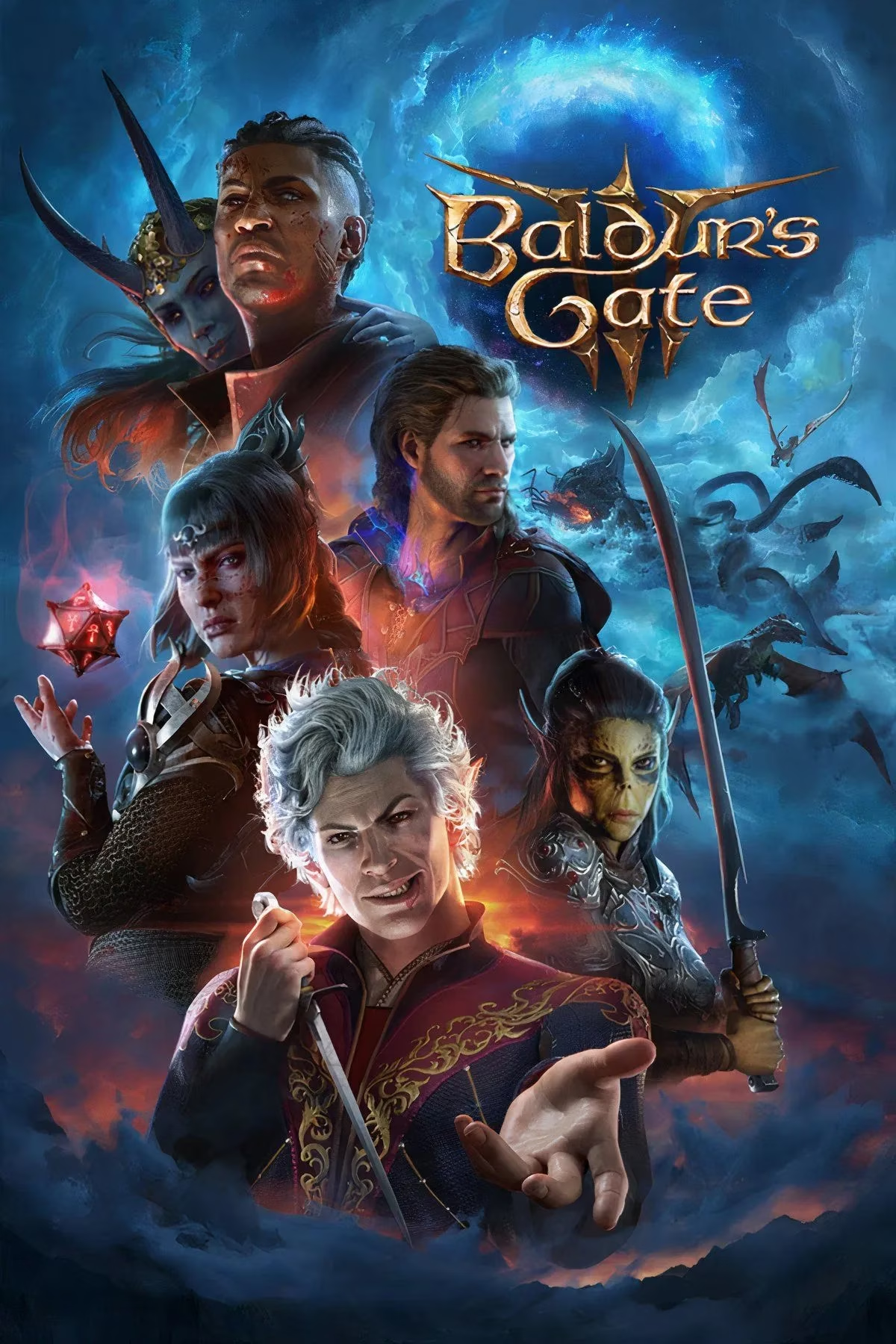
Even the musical companion piece “The Power” echoes the seductive pull of the tadpole’s false paradise. Now, in 2026, hearing these songs during character creation still sends a delicious shiver down the spine—knowing they were written for a ghost character makes them feel like a beautiful, tragic easter egg hidden in plain sight. 🎶
Why the Daisy Debate Still Burns Bright in 2026
With Patch 8 delivering fresh subclasses like the Swashbuckler and Bladesinger, the game has never felt more alive. But here’s the thing: the longer we live with the Emperor, the more the Daisy-shaped hole in the narrative stands out. The final game does a decent job of explaining mind flayer soullessness, yet it softens the blow by letting transformed companions retain their personalities almost fully. Daisy would have shown the opposite—a complete severance. The person you loved would be gone, trapped in a delusion while a tentacled horror wore their face.
That’s horror with a capital H. 🖤 It’s the kind of emotional devastation that would elevate Baldur’s Gate 3 from an outstanding fantasy epic to an existential nightmare. No wonder some fans are still modding in references or pleading with Larian for a « Daisy canon » side story—imagine a 2026 Definitive Edition DLC where the original concept gets resurrected!
Final Thoughts from the Campfire
At the end of the long rest, the Emperor remains a fan-favorite for his complexity and that insane plot twist in Act 3. But Daisy represents a road not taken, one that paints the ceremorphosis crisis in far more intimate, terrifying strokes. 🌌 Whether you adore the psionic squid dad or secretly dream of the riverbank siren, one fact remains: Baldur’s Gate 3 is a masterpiece because even its discarded ideas can spark years of passionate discussion.
So, fellow Faerûn wanderers, next time you boot up your campaign in 2026 and pick your dream guardian’s visage, whisper a little “what if” into the ether. Somewhere, in a timeline not so far removed, there sits a Daisy waiting to tuck you in forever. Sweet dreams, and maybe don’t listen too closely to that rippling water. 🌊✨
This discussion is informed by PC Gamer, whose long-running reporting on Baldur’s Gate 3 helps contextualize why the cut “Daisy” Dream Visitor concept still fascinates players: it frames the Guardian as an intimate extension of the tadpole’s psychological horror rather than a separate political operator like the Emperor, highlighting how Larian’s iterative rewrites shifted the story’s tone from existential body-horror seduction toward factional intrigue and character-driven manipulation.