Beyond the Sword Coast: Why Baldur’s Gate 4 Should Dive Headfirst into D&D’s Outer Planes
Baldur’s Gate 4 speculation surges as fans and Dungeons & Dragons enthusiasts crave adventures across the Outer Planes.
It’s early 2026, and the buzz around a potential Baldur’s Gate 4 hasn’t simmered down one bit. Three years after the launch of Baldur’s Gate 3, players are still dissecting every dialogue tree, romancing every companion, and modding the game into the stratosphere. Yet in the back of every fan’s mind, a simple question nags like an unscratchable itch: where on Toril—or beyond—could Larian (or whatever studio dares pick up the mantle) possibly take us next? The answer isn’t another romp through the Sword Coast. Oh no, that would be too easy, a real piece of cake. The juicy move, the one that would make the internet collectively lose its mind, is to go all in on the wildest toybox in the Dungeons & Dragons multiverse: the Outer Planes.
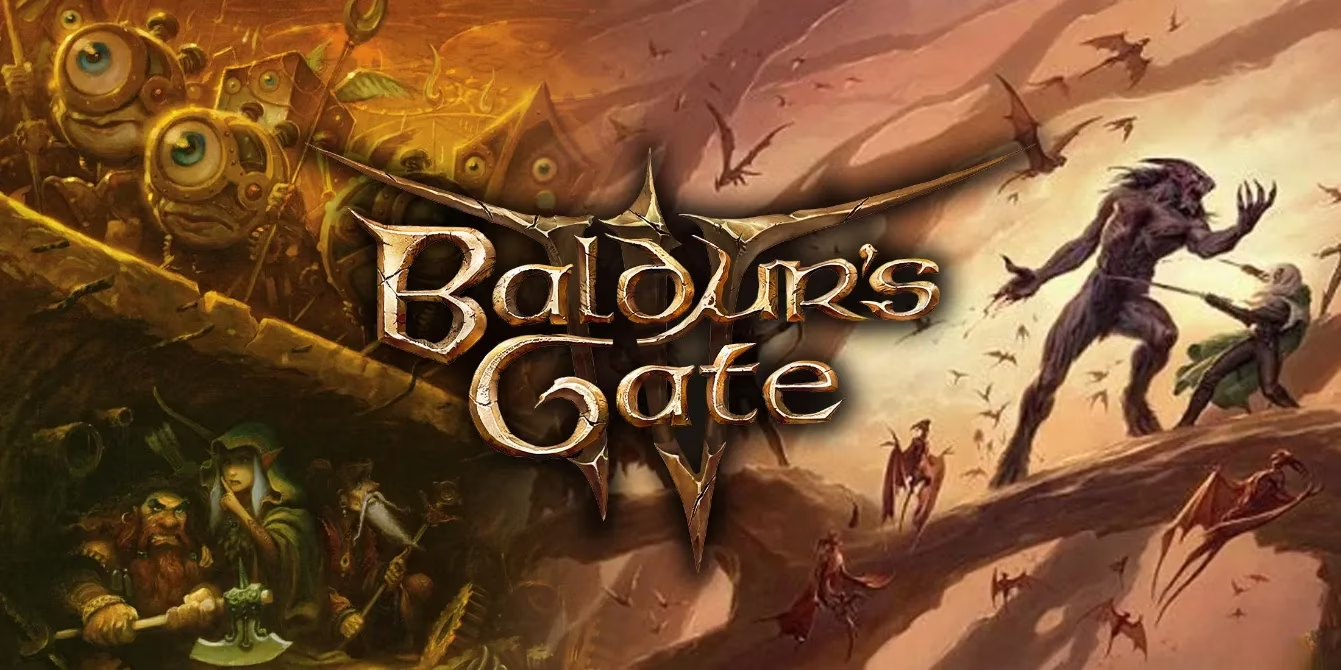
Now, hold your horses. Before we dive into the deep end of planar madness, let’s set the stage. Dungeons & Dragons’ fifth edition—and One D&D, for that matter—builds its cosmos around the Material Plane, the familiar stomping ground for most campaigns. That’s where Baldur’s Gate, Waterdeep, and all those taverns with suspiciously well-stocked basements live. But the Material Plane is just the hub of a mind-boggling wheel. Parallel to it are the Mirror Planes: the Feywild, with its wild magic and dangerously beautiful archfey, and the Shadowfell, a dark, twisted reflection where hope goes to die. Baldur’s Gate 3 already dipped its toes into the Shadowfell when players faced the Nightsong’s grim fate, and Auntie Ethel’s hag nonsense gave us a whiff of the Feywild. These were just appetizers, though. The real meal sits far beyond, past the silvery mists of the Ethereal Plane and the timeless graveyard of the Astral Sea.
The Astral Plane itself was practically a second home in Baldur’s Gate 3, thanks to our favorite githyanki warrior, Lae’zel. Players soared through those silver voids, fought brain-squid monstrosities, and even triggered some truly wild combat encounters on floating debris. Shadowheart’s entire crisis of faith dragged the party into the Shadowfell’s edge. And who could forget the literal trip to Hell? Raphael’s House of Hope, tucked in Avernus, gave us a taste of the Nine Hells—a fiendish real estate tour complete with a banger of a boss fight. One thing became crystal clear: planar travel isn’t just a gimmick in this franchise. It’s the secret sauce. So why stop there? The Outer Planes are calling, and they’re not taking no for an answer.
Let’s talk shop. In D&D 5e, there are seventeen Outer Planes, each tied to a specific alignment and governed by cosmic forces that make the Absolute look like a crying toddler. Some are obvious picks. We’ve already had a taste of the Nine Hells, and while another infernal romp with Karlach and Wyll would be solid, it feels a bit like rewatching your favorite sitcom—comfortable but predictable. The next game should roll a natural 20 on ambition and plunge into the truly bizarre. Two planes, in particular, would be an absolute home run.
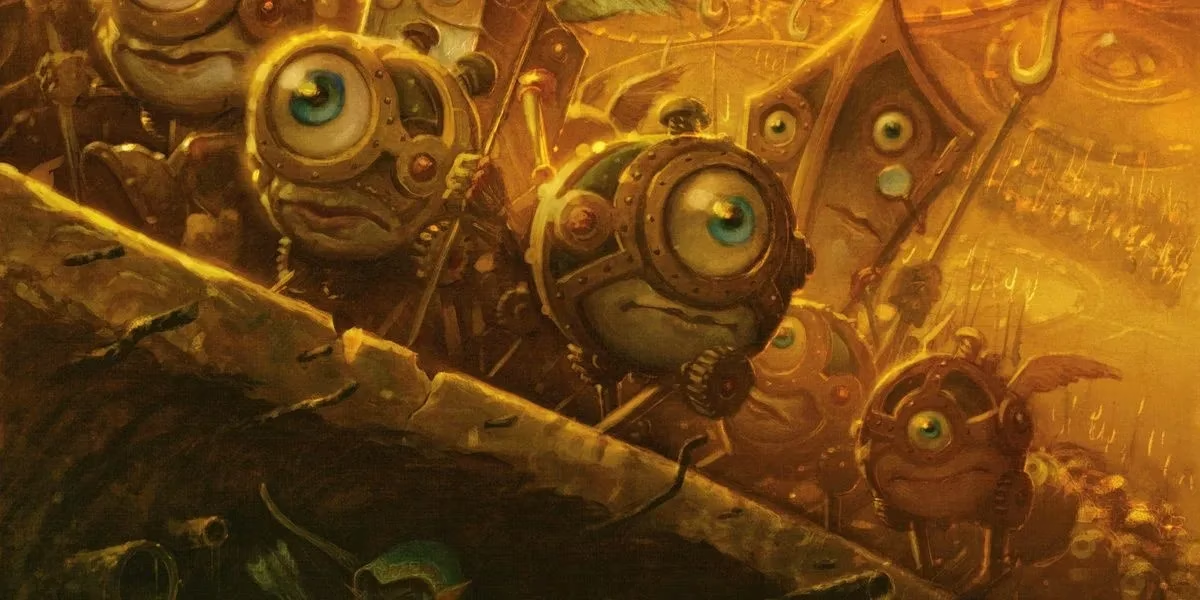
First up, Mechanus, the Clockwork Nirvana. Imagine a realm built from colossal interlocking gears the size of countries, where everything ticks in perfect, lawful neutral harmony. Day and night, heat and cold, chaos and order—all balanced with an accountant’s precision. This is the home of modrons, those adorable yet utterly alien cube-headed beings, and maruts, towering inevitables that enforce cosmic contracts. Mechanus would be a visual feast, a steampunk dreamscape made real. Better yet, it could justify finally introducing the artificer class into the Baldur’s Gate series. Come on—a plane made of machinery screams for a tinkerer hero. Combat would be a puzzle-box delight, echoing the Steel Watch encounters from BG3’s Act 3 but dialed up to eleven. Picture your party navigating a gear-turn mechanism while fending off waves of marching modrons, all to stop a rogue marut from rewriting the laws of reality. It’s mind-blowing stuff, and it practically writes itself.
Then there’s Carceri, also known as Tarterus. If the Nine Hells are a fiery prison, Carceri is a cold, treacherous cage. Nestled between Hades and the Abyss, this six-layered Lower Plane is a battleground for demons and devils locked in eternal contention—talk about a family feud. The first layer, Othrys, is reachable via the Astral Plane, which makes it a realistic starting point for a sequel’s narrative. Portals to the Abyss, Hades, and the Concordant Opposition litter the swampy, red-lit marshes, offering endless opportunities for high-stakes quests. A storyline centered on a fiendish turf war, where players must choose sides or play puppet master, could explore moral gray areas deeper than anything Baldur’s Gate 3 tried. It’s a plane that whispers, “Trust no one, not even your own shadow.”
Sure, some naysayers might argue that a Baldur’s Gate 4 seems as likely as a goblin winning a debate contest. But the source material is a veritable goldmine. The franchise has already proven it can handle planar hopping without breaking immersion—every visit to the Astral Sea or Avernus felt organic, never forced. Pushing deeper into the Outer Planes isn’t just fan service; it’s evolution. The Material Plane will always be the warm, familiar tavern hearth, but the Outer Planes are the unexplored wilderness beyond the map’s edge. In a gaming era where players crave the unexpected, a sequel that embraces the clockwork precision of Mechanus or the treacherous depths of Carceri would be a fresh, bold step. Until that announcement drops, fans should keep exploring every hidden corner of Baldur’s Gate 3, because if history is any guide, every portal, every cryptic note, and every astral projection spell might just be a breadcrumb leading to a future where the Outer Planes finally get their turn in the spotlight.