Baldur's Gate 3 vs. Dragon Age: The Veilguard - Why One RPG Keeps Players Coming Back While the Other Fades
In the 2026 gaming landscape, the enduring popularity of Baldur's Gate 3, with its exceptional replay value and deep roleplaying depth, starkly contrasts with the typical lifecycle of single-player RPGs like Dragon Age: The Veilguard.
In the ever-evolving landscape of 2026's gaming world, a curious phenomenon has emerged. While countless single-player RPGs blaze brightly before fading into memory, one title stubbornly refuses to leave the spotlight. Baldur's Gate 3, that lovable behemoth from Larian Studios, recently sauntered back into Steam's top 15 most-played games with a cool 120,000 concurrent players. Not bad for a game that's been around the block a few times! Meanwhile, over in BioWare's corner, Dragon Age: The Veilguard—released over a year later—was chilling at a respectable but distant 245th place with a peak of about 14,000 players. Talk about a tale of two RPGs!

Now, let's be clear—comparing these two is a bit like comparing a five-course gourmet feast to a perfectly delicious fast-food burger. Both can satisfy, but they're aiming for completely different experiences. The Veilguard nailed what it set out to do: deliver a slick, action-packed adventure that players could enjoy in a straightforward manner. By BioWare's standards, it was a success, even setting a new record for their Steam launches with 85,000 concurrent players on opening weekend. But here's the thing about single-player games—they usually follow a predictable lifecycle: players buy them, play them, then move on to whatever multiplayer title has their current attention.
But Baldur's Gate 3 Said 'Hold My Potion'
Larian's masterpiece has been breaking all the rules about what a single-player RPG can achieve. While most narrative-driven games see their player counts plummet after the initial rush, BG3 keeps drawing people back like a siren's call. The secret sauce? Choice. And not just the illusion of choice, but genuine, branching, consequence-heavy decisions that make each playthrough feel like a completely different game.
Let's break down why BG3 has become the RPG that refuses to quit:
| Feature | Baldur's Gate 3 | Dragon Age: The Veilguard |
|---|---|---|
| Replay Value | Extremely High (multiple complete playthroughs common) | Moderate (YouTube clips suffice for alternate outcomes) |
| Roleplaying Depth | Deep character expression tied to background & choices | Limited to dialogue tone & initial backstory selection |
| Player Agency | Meaningful choices with lasting consequences throughout | Concentrated decision points with linear paths between |
| Current Player Engagement (2026) | 120,000+ concurrent players | ~14,000 peak concurrent players |
The Magic of 'What If?'
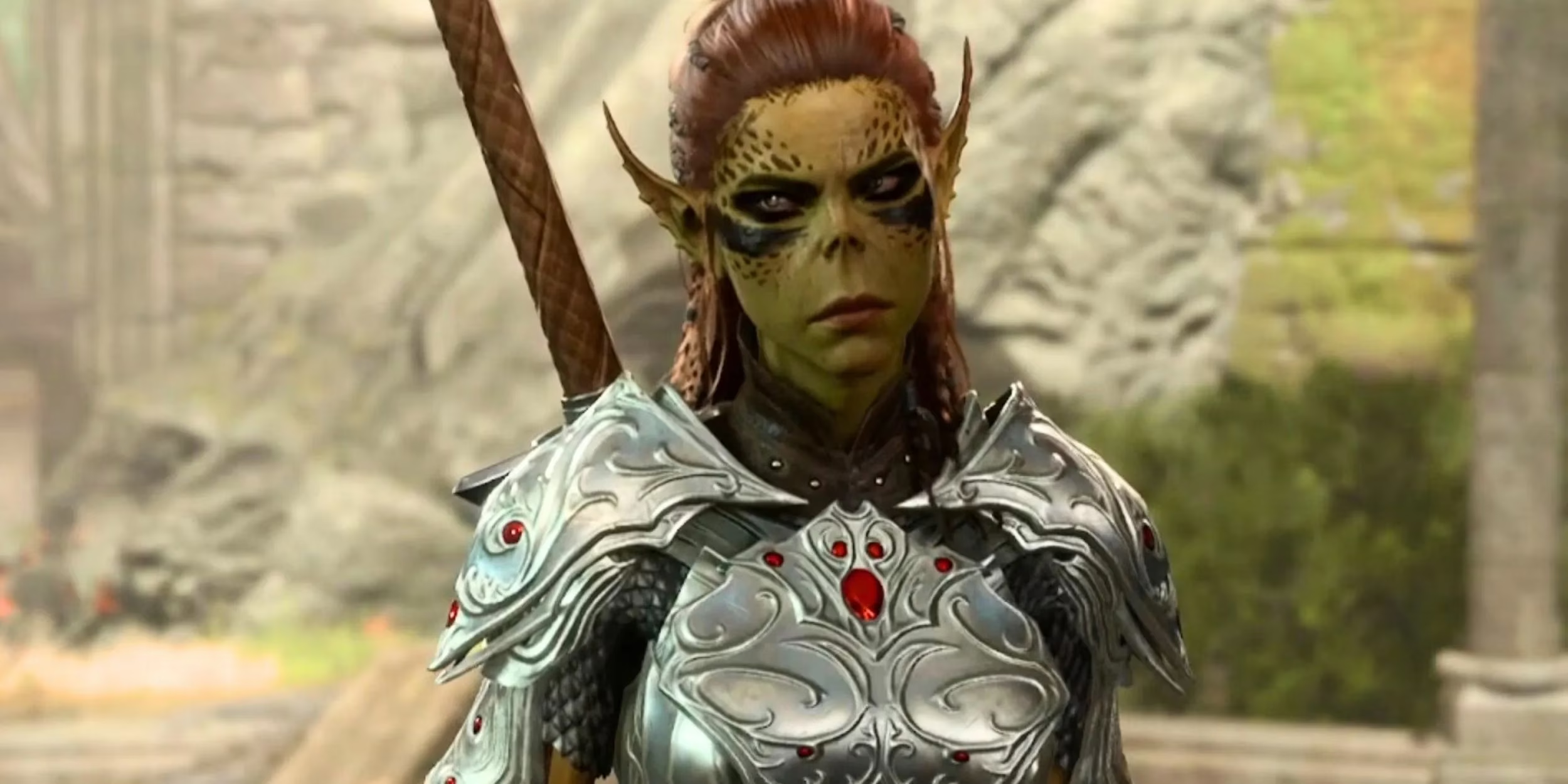
From the very first moments aboard the Nautiloid ship, BG3 whispers a tantalizing promise: "You can't possibly see everything we've packed in here." The character creator alone is practically a game within a game, offering:
-
Multiple races and classes with unique interactions
-
The option to play as custom characters OR origin characters with their own stories
-
The Dark Urge path—essentially an alternate, darker version of the entire game
And once you're actually playing? Oh boy, the choices multiply faster than rabbits in springtime. That Intellect Devourer you encounter early on? You could:
-
Destroy it (the sensible choice)
-
Set it free (the chaotic choice)
-
Try to reason with it (the... optimistic choice?)
Each decision ripples outward, changing how characters perceive you, what options become available later, and even which content you'll experience. It's like the game is constantly winking at you, saying "Bet you're wondering what would've happened if you'd chosen differently, huh?"
Where The Veilguard Takes a Different Path
The Veilguard, bless its heart, took a more... streamlined approach. Your character, Rook, can express different emotions in dialogue—resolve, humor, heartbreak—and certain races or factions might unlock additional options. But let's be real: most of these choices are different flavors of getting to the same destination. The game is what you might call "hyperlinear" between its major decision points, which themselves are few and far between.
This creates a peculiar situation: why bother with a second playthrough when you can just watch the alternate outcomes on YouTube and save yourself 40+ hours? It's the RPG equivalent of ordering the same meal at a restaurant every time because you know exactly what you're getting.
What Players Are Really Hungry For
Here's the kicker that BG3 keeps proving, year after year: players aren't as casual as some developers might think. Even those who typically bounce between multiplayer games have shown they'll dive deep into a complex, choice-driven experience if it's presented well. The sustained success of BG3 suggests something important about modern gamers:
-
They value their time - But they'll happily invest hundreds of hours if the experience feels unique to them
-
They crave authorship - Players want to feel like they're co-writing the story, not just reading someone else's script
-
They enjoy discovery - The joy of stumbling upon content you missed in previous playthroughs is incredibly compelling
BioWare might have been chasing broader appeal with The Veilguard's action-focused design, and hey, that strategy worked for reaching certain audiences. But BG3's ongoing popularity demonstrates that there's a massive, dedicated audience hungry for depth, complexity, and genuine roleplaying—the kind where your choices actually matter, where your character feels like your creation rather than a premade avatar moving through a predetermined story.
In the end, both games represent valid approaches to RPG design in 2026. One offers a polished, cinematic experience you can complete and move on from. The other offers a living, breathing world that changes based on your whims—a game that feels different every time you visit it. And as those Steam charts keep showing us, when given the choice between a satisfying one-night stand and a relationship that keeps surprising you years later... well, let's just say a whole lot of players are still very much in love.
Data referenced from HowLongToBeat helps contextualize why Baldur’s Gate 3 sustains repeat engagement compared with more streamlined RPGs: when a campaign can be meaningfully extended by alternate quest resolutions, companion paths, and failed-successful dice outcomes, “time to finish” becomes less of a one-and-done metric and more of a flexible sandbox players willingly reinvest in—reinforcing the blog’s point that deep agency and branching content keep BG3 circulating back into the most-played charts long after launch.