Baldur's Gate 3's Legacy: Why Its Influence Is Still Years Away
Baldur's Gate 3 and RPG innovation captivated millions with its cinematic triumph, yet its monumental impact has not yet sparked a wave of inspired successors, highlighting a modern development dilemma where imitation takes years.
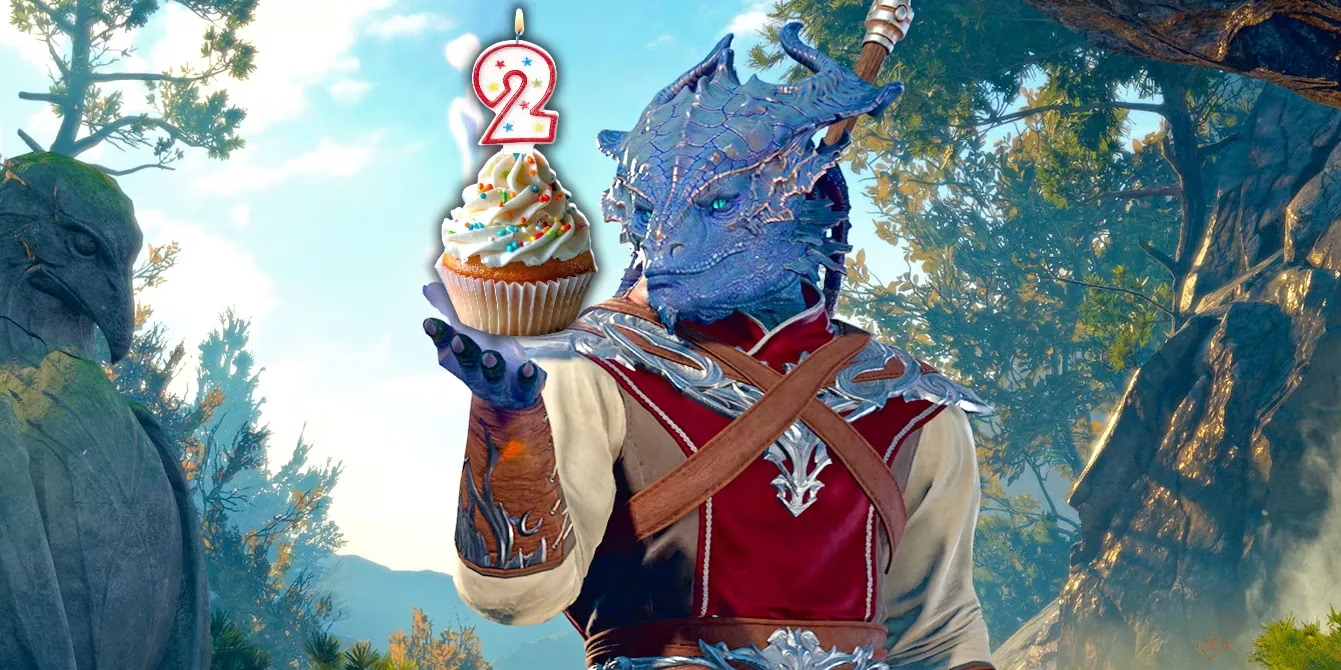
As Baldur's Gate 3 celebrated its two-year anniversary in 2025, the gaming world looked back on its monumental impact. The game, which Larian Studios unleashed from early access in August 2023, didn't just launch; it had a full cinematic transformation, stepping into the spotlight to captivate millions. Its accolades were immediate and lasting, securing Game of the Year in 2023 and achieving staggering sales figures. By the end of 2024, over 15 million copies had been sold, and its player base remained fervently active, boasting more than 120,000 concurrent players well into 2025. The industry watched, analyzed, and praised. Yet, two years later, a curious question lingered: where were all the games it was supposed to inspire?
🕰️ A Glimpse into a Bygone Era of Imitation
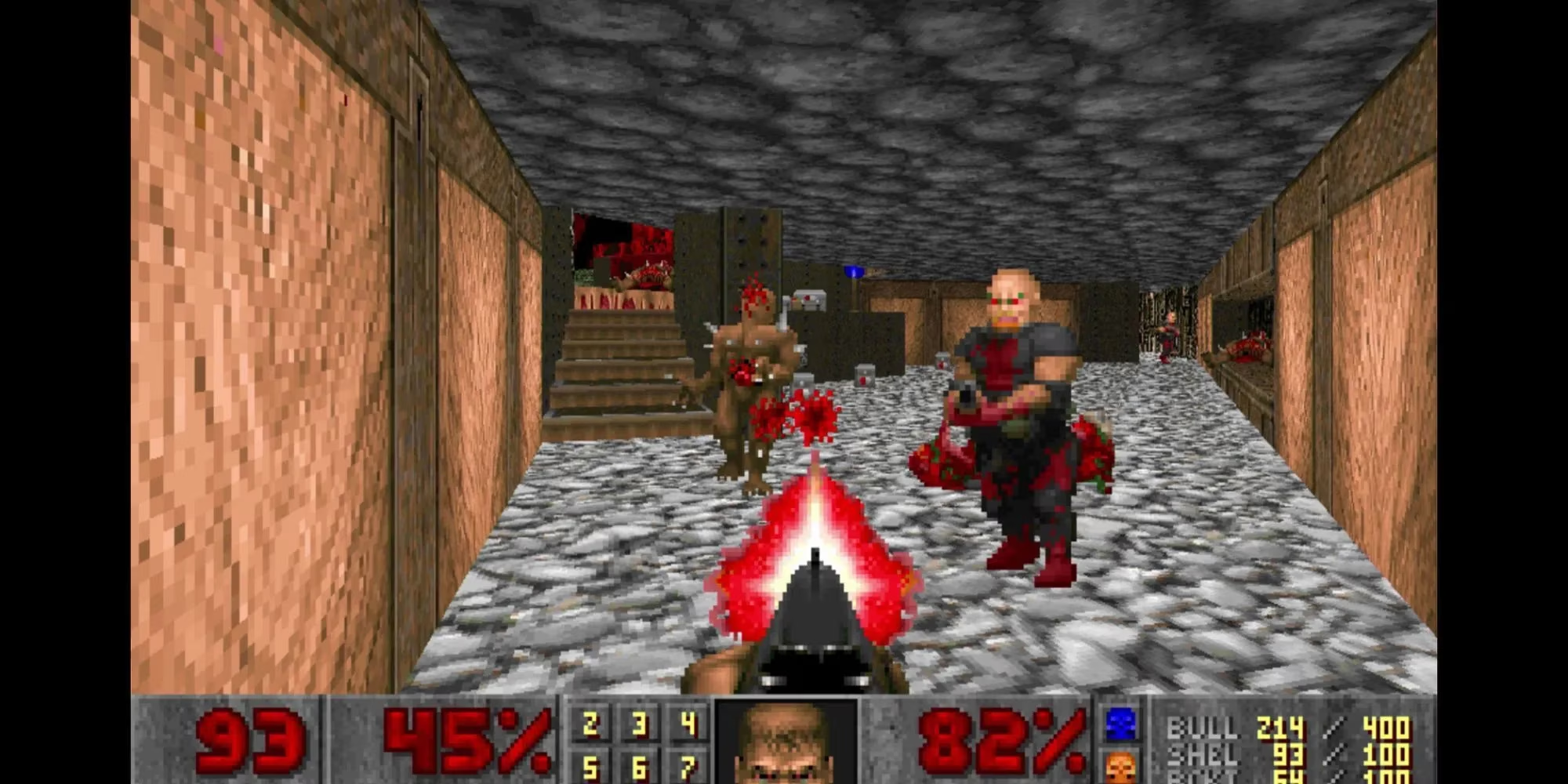
If this were the 1990s, the landscape would look remarkably different. When Doom revolutionized gaming in 1993, it didn't just create a genre—it spawned an entire wave of imitators within a remarkably short timeframe. The timeline was rapid and decisive:
-
1995: Titles like Marathon, Star Wars: Dark Forces, and Rise of the Triad hit the market.
-
1996: Chex Quest even found its way into cereal boxes.
-
1997: Games such as Hexen, Blood, and Duke Nukem 3D began to evolve and differentiate the genre.
The term "Doom clone" was pervasive until around 1998, when Half-Life arrived and the label naturally evolved into "first-person shooter." The entire cycle—from inspiration to imitation to genre maturation—took about five years. Crucially, the original developers at id Software had already moved on, releasing a sequel and new franchises like Quake while the clones were still finding their footing.
🐢 The Modern Development Dilemma: A Slower Pace
In 2025, the development clock ticks at a fundamentally different, much slower rhythm. A game like Baldur's Gate 3, which presents a new gold standard for narrative depth, player agency, and production value in CRPGs, doesn't inspire immediate copycats. Why? The answer lies in the sheer scale and time required for modern game creation.
-
Average Development Time: Major titles now typically take four to five years to go from concept to store shelf.
-
The Case of Clair Obscur: Expedition 33: This game drew early comparisons to BG3 for revitalizing a classic genre (JRPGs). However, its pre-production began in 2019, long before BG3's early access period. Its similarities were a case of parallel innovation, not direct influence.
-
The Implication: Any triple-A project that truly seeks to learn from and build upon Baldur's Gate 3's successes likely only entered serious development after its 2023 launch. By that math, the earliest we could expect to see such games is 2027 or 2028.
🏃 The Indie Exception and the Breath of the Wild Blueprint
While the AAA pipeline is sluggish, the indie scene can react with more agility. Smaller, leaner teams can pivot and produce inspired works on a shorter timeline. A perfect historical analogy is The Legend of Zelda: Breath of the Wild (2017).
| Game | Genre/Scale | Release Year | Time After Inspiration |
|---|---|---|---|
| A Short Hike | Indie Adventure | 2019 | ~2 years |
| Immortals Fenyx Rising | AAA Action-Adventure | 2020 | ~3.5 years |
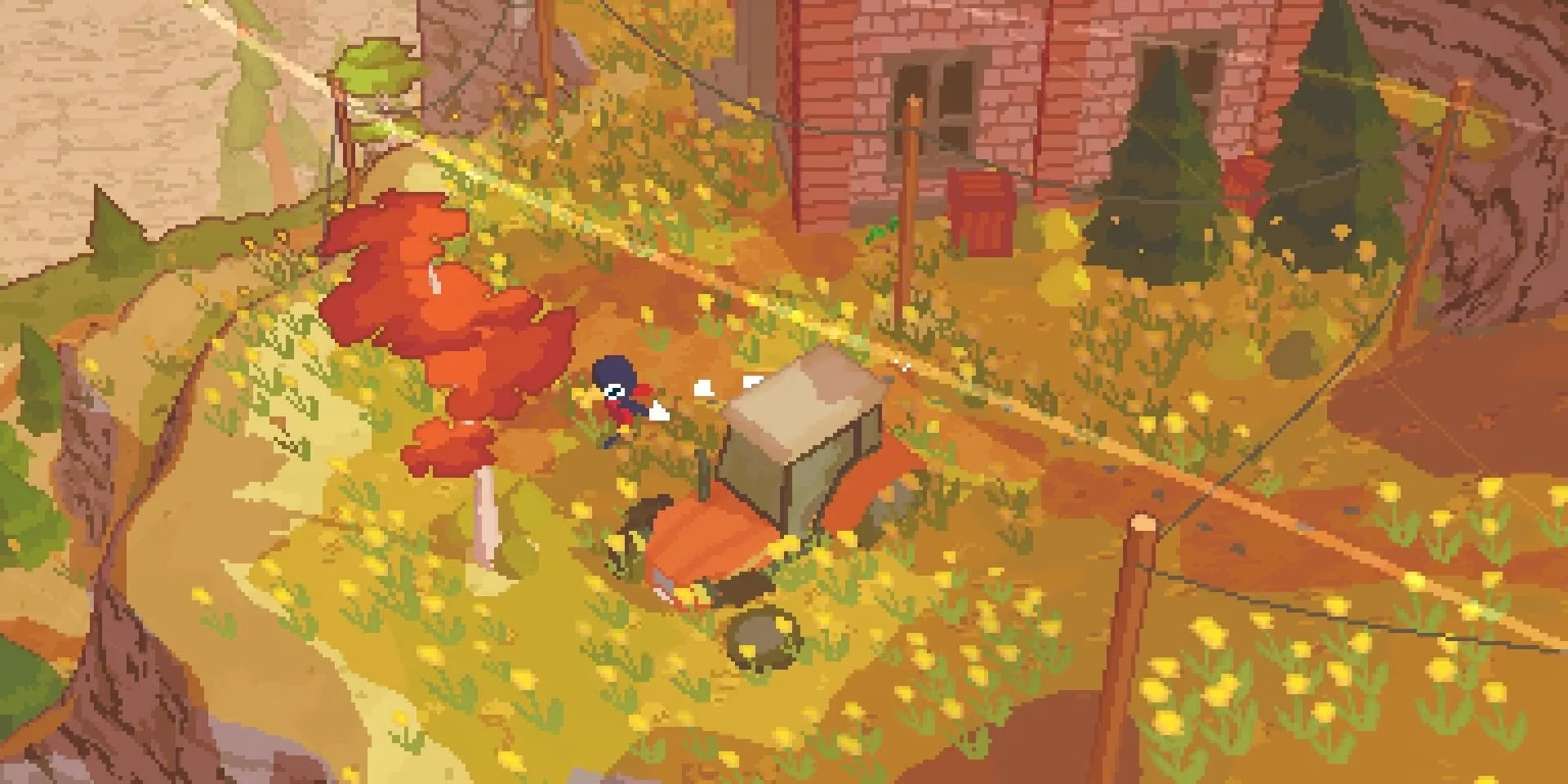
The indie homage, A Short Hike, captured the spirit of exploration and emerged just two years later—mirroring the Doom clone timeline. In contrast, the first major AAA title to deeply integrate its design philosophy, Immortals Fenyx Rising, arrived three and a half years later. This pattern strongly suggests that while indie games influenced by Baldur's Gate 3 might be on the horizon or even nearing release in 2025, their AAA counterparts are still years away in the development oven.
🔮 The Inevitable Influence and a Matter of Timing
The legacy of Baldur's Gate 3 is not in doubt. It has already reshaped player expectations for choice, consequence, and cinematic storytelling in RPGs. Its influence will undoubtedly permeate a generation of games. The current absence of obvious clones isn't a sign of failure; it's a symptom of the modern industry's elongated creative cycles.
Developers are undoubtedly studying its systems, its success with a mainstream audience, and its approach to player freedom. These lessons are being internalized in studios worldwide. The games born from this inspiration are coming, but they are taking the scenic route through years of development hell, iterative design, and polish.
So, as we stand in 2025, two years after Baldur's Gate 3 removed its proverbial glasses and wowed the world, we are not late to the party. We are simply waiting for the guests who RSVP'd to arrive. In the grand tradition of cinematic wisdom, the games influenced by this titan won't be late. Baldur's Gate 3 was simply, and spectacularly, early. The industry is still playing catch-up, and the true fruits of its influence have yet to bloom.