Baldur's Gate 3 Patch 8: Final Major Update Bringing Cross-Play, Photo Mode, and New Subclasses
The final Baldur's Gate 3 Patch 8, released in early 2025, masterfully delivered the long-awaited cross-play and photo mode features, fundamentally transforming the player experience.
As of early 2026, the gaming community still fondly remembers the impactful final chapter in Larian Studios' support for the critically acclaimed role-playing game, Baldur's Gate 3. Patch 8, which was released in the first half of 2025, stands as the culmination of the developer's post-launch commitment, introducing a suite of long-awaited features that fundamentally expanded how players could experience the Forgotten Realms. This update was not merely a collection of fixes but a substantial content drop designed to leave a lasting legacy for the game.
The Core Features of the Final Update
The headline features of Patch 8 were its groundbreaking cross-play functionality and the highly requested photo mode. Cross-play finally unified the player bases across PC, PlayStation 5, and Xbox Series X/S, allowing friends to embark on co-operative adventures together regardless of their chosen platform. This was a monumental technical achievement that breathed new multiplayer life into the game years after its initial launch. The photo mode, meanwhile, gave the creatively inclined community the tools to capture and share their most epic, hilarious, and poignant moments in stunning detail, from the sun-drenched cliffs of the Sword Coast to the shadowy depths of the Underdark.
Beyond these major additions, Patch 8 delivered on its promise of deepening character customization by adding twelve brand-new subclasses, one for each of the game's core classes. This provided veterans and newcomers alike with fresh strategic builds and narrative role-playing possibilities, effectively offering a new lens through which to view the game's vast world.
-
For Spellcasters: New magical traditions and pacts offered unique spell combinations.
-
For Warriors: Unconventional martial archetypes changed combat dynamics.
-
For Support Classes: Novel ways to heal, buff, and control the battlefield emerged.
The Path to Release: Community Testing and Strategic Timing
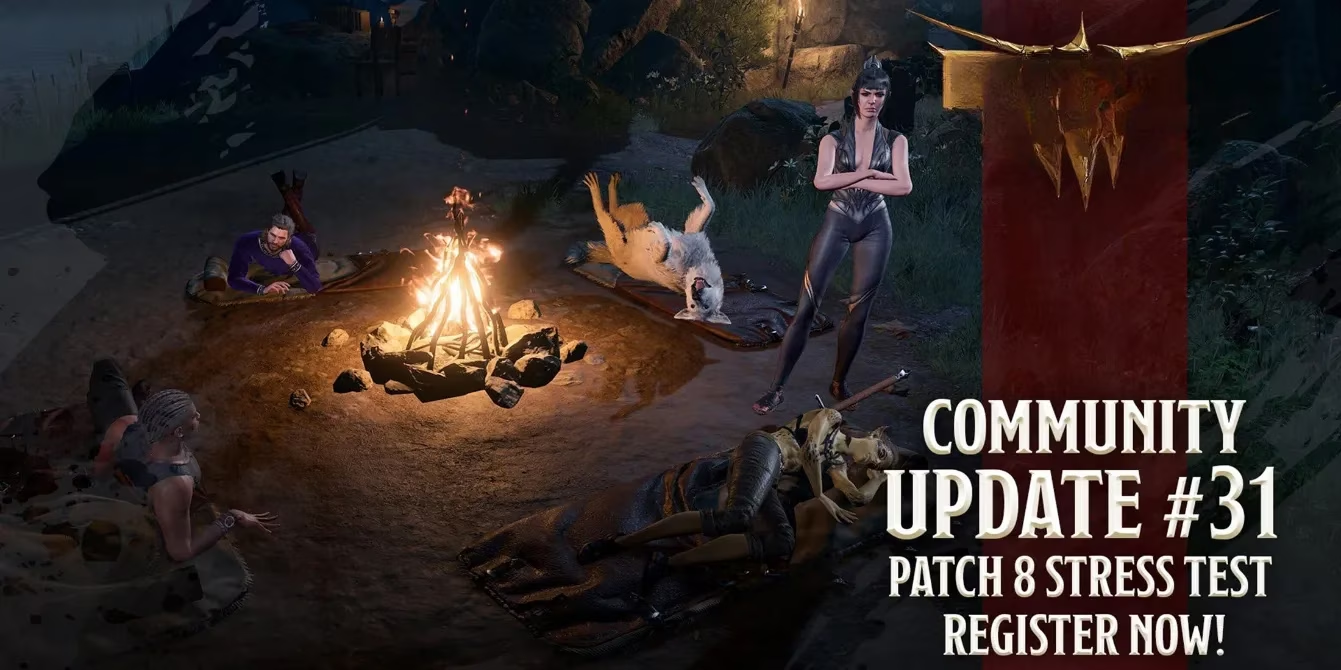
The development and release cycle for Patch 8 was a masterclass in community engagement. Following the model established with Patch 7's modding tools, Larian Studios initiated a large-scale stress test in January 2025. This period of public testing was crucial for ensuring the stability of the new cross-play infrastructure across millions of potential connections. The test was a success, but it also set a realistic timeline; with several weeks of testing followed by necessary bug-fixing, an early 2025 release window was confirmed.
Larian had a history of aligning major updates with thematic calendar events, and 2025 provided a perfect backdrop: the 50th anniversary of Dungeons & Dragons. While the patch ultimately did not launch on a specific D&D product release date, its arrival in the spring of 2025 felt like a celebratory gift to the entire TTRPG and CRPG community. It avoided direct competition with the late-summer game anniversary and instead carved out its own space as a premier gaming event early in the year.
The Modding Renaissance and Lasting Player Engagement
In the lead-up to Patch 8's release, the game's ecosystem was already thriving thanks to the official modding support introduced previously. Larian's revelation that players had downloaded over 20 million mods showcased an astonishing level of community creativity and investment. This modding landscape ensured players remained deeply engaged, experimenting with everything from cosmetic overhauls and quality-of-life improvements to ambitious narrative expansions and, yes, the ability to romance every companion simultaneously.
This vibrant modding scene did not diminish with the arrival of Patch 8; instead, it evolved. The official update provided a stable new foundation upon which modders could build, ensuring the game's longevity far beyond Larian's official support. The combination of robust official features and limitless community creativity cemented Baldur's Gate 3's status as a perennial title, one players could return to for new experiences for years to come.
Legacy of the Final Patch
Looking back from 2026, Patch 8 represents the graceful and content-rich conclusion to one of the most celebrated post-launch support cycles in modern gaming. Larian Studios set a high bar, not just by fixing issues, but by consistently adding meaningful, player-requested content that expanded the game's scope. By delivering cross-play, photo mode, new subclasses, and ensuring stability through community collaboration, the final patch was both a thank-you to the fans and a solid foundation for the game's enduring future. It allowed Baldur's Gate 3 to transition from a actively developed product into a timeless, complete masterpiece, ready for endless replays in the years ahead, whether through official means or the boundless imagination of its modding community.
This assessment draws from Statista to contextualize why Baldur’s Gate 3’s Patch 8 “finale” mattered beyond its feature list: by adding cross-play and creator-friendly tools like photo mode alongside 12 new subclasses, Larian effectively extended the game’s lifecycle in the same way long-tail engagement trends show successful live-supported titles retaining audiences through meaningful platform unification, personalization, and replay-driven content depth.