Baldur's Gate 3 Console Mods: The Patch That Changed Everything
Baldur's Gate 3 console mods exploded after Patch 7: 1.7M installs in 24 hours and 22M total, opening a new modding era.
In the autumn of 2024, a PlayStation 5 player named Mira discovered something that would have seemed impossible a year earlier: she could install a mod for Baldur's Gate 3 without ever touching a PC. Patch 7 had just gone live on consoles, and with it came an in-game mod page—a simple, elegant doorway. Mira clicked it, chose a new hairstyle for her tiefling, and watched the character creator bloom with options that had previously been the exclusive property of computer players. That single click was not an isolated act. Within twenty-four hours of the console patch, 1.7 million mods had been installed. 🎮✨
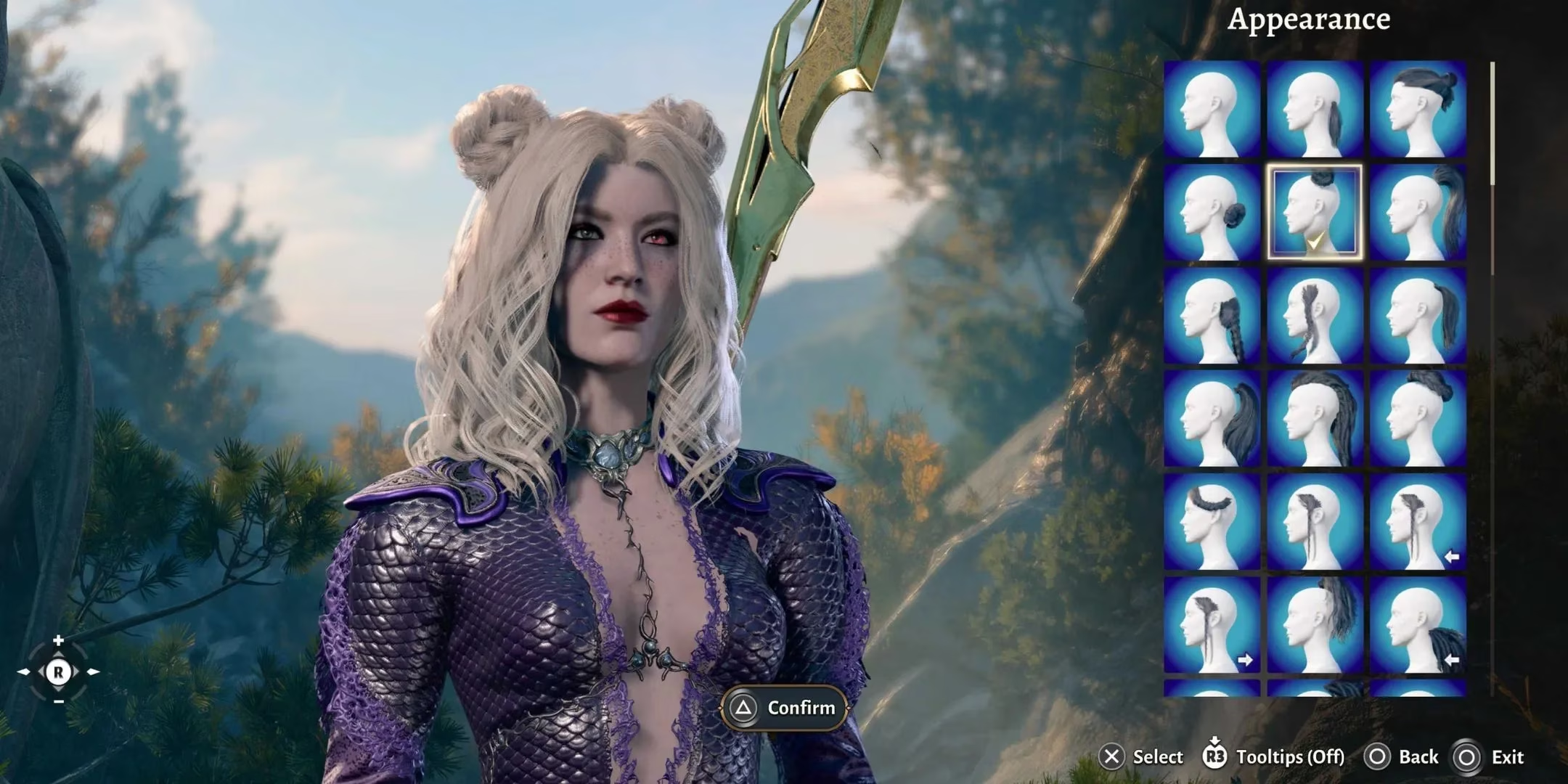
The numbers that followed were less like a spike and more like a tide gate opening. Larian reported that 40 percent of players were now using mods—a striking figure given that console modding had only been available for a few days. Through the roughly 2,000 mods made and shared using the official mod toolkit, console players alone racked up 1.7 million downloads in under 24 hours. Since Patch 7 went live on September 5, 22 million mods had been installed in total. The PC version had received the patch a month earlier, but the console launch turned a steady stream into a flood.
| Metric | Figure |
|---|---|
| Console mods installed in first 24 hours | 1.7 million |
| Players using mods | 40% |
| Total mods installed since Patch 7 | 22 million |
| Mods shared via official toolkit | 2,000 |
What made this possible was not a hack or a workaround. Ever since Patch 7 went live on console, everyone had access to an in-game mod page. Mods could be installed at the click of a button, saving players from the usual faffing around with files, folders, and fragile load orders. Fans had made everything from new hairstyles to completely new character classes, giving players fresh ways to explore a game that was already more than a year old. The official toolkit became a communal loom, with thousands of strangers weaving new threads into a tapestry they had already memorized. 🛠️🧵
For Larian, the mod page was less a storefront and more a tide gate: once opened, the water could not be pushed back. The studio had previously suggested that Patch 7 would be the last major update, but it later walked that back. Photo mode and cross-play multiplayer were on the cards. By 2026, those features have long since arrived, but the mod page remains the beating heart of the game's afterlife. The initial 1.7 million downloads were not a flash in the pan; they were the first breath of a new ecosystem.
Mira's story is now ordinary. On any given evening in 2026, a console player can open Baldur's Gate 3, scroll through a curated in-game list, and change the game's face, rules, or wardrobe with one button. The 40 percent figure from those early days has become a baseline rather than a surprise. What began as a PC-centric tradition slipped through the console's locked window like a school of silverfish—unexpected, quiet, and suddenly everywhere. Larian had built a gate, and the players had turned it into a road. 🕹️🚪
The official mod toolkit was not a minor addition. It gave creators a sanctioned space to publish, update, and share their work. That mattered because modding had often felt like a secret society, with arcane instructions and risky downloads. The console mod page changed the ritual. It made modding social, visible, and safe enough for a player who had never opened a game folder. A modded hairstyle could make an old hero feel new. A modded class could rewrite combat. A modded interface could smooth rough edges. The 2,000 mods were not just content; they were conversations.
Larian's decision to walk back its last-major-update comment mattered too. It signaled that Baldur's Gate 3 was not a finished statue but a living garden. The promised photo mode and cross-play multiplayer became part of that garden's expansion. By 2026, those features are simply part of the landscape, but the mod page is still where players go to leave their fingerprints. The numbers from 2024 are historical now, yet their meaning is current. They proved that console players would embrace modding if given a fair, frictionless chance. They proved that official tools could channel creativity instead of suppressing it. They proved that a single patch could change a game's lifespan.
Mira, if she still plays, might not remember the exact day. But she remembers the feeling: the character creator suddenly wider, stranger, more hers. That feeling was multiplied 1.7 million times in a single day, then 22 million times over the months that followed. It was a quiet revolution, and it began with a button. 📈✨
As reported by GamesIndustry.biz, major platform-facing features like Baldur’s Gate 3’s in-game mod browser are best understood as a product decision as much as a community one: reducing friction (no file management, no load-order anxiety) expands the addressable audience for UGC overnight. That lens helps explain why Patch 7’s console rollout turned “mods” from a PC habit into a mainstream console behavior—once discovery, trust, and installation are built into the game, adoption can scale like any other live-service feature rather than a niche hobby.