Ao's Divine Non-Interference: The Selective Enforcement of Godly Rules in Baldur's Gate 3
Explore Ao Overgod's divine rules and Mystra's and Selune's intriguing meddling in Baldur's Gate 3 lore, revealing cosmic double standards.
In the vast pantheon of deities and cosmic entities that populate the world of Baldur's Gate 3, one name stands as the ultimate authority, a silent overseer of divine order. Ao, the Overgod of the Forgotten Realms, established a fundamental rule: gods like Mystra of magic and Selune of moonlight must not directly interfere in mortal affairs. This decree was meant to maintain cosmic balance, preventing deities from turning the Material Plane into their personal chessboard. Yet, as any seasoned adventurer in Faerûn might observe, rules—even divine ones—appear to be curiously flexible when the plot demands it. The Netherbrain's apocalyptic threat to consume all of Baldur's Gate and beyond unfolded without a single god descending from the heavens to smite it directly. They worked through champions, granted whispers of power, and hoped their chosen mortals would suffice. This is the official story, the narrative of divine restraint. But if one looks closer at the tales of certain companions, a different, more intriguing pattern of celestial behavior emerges—one where the line between non-interference and intimate involvement becomes wonderfully, mysteriously blurred.
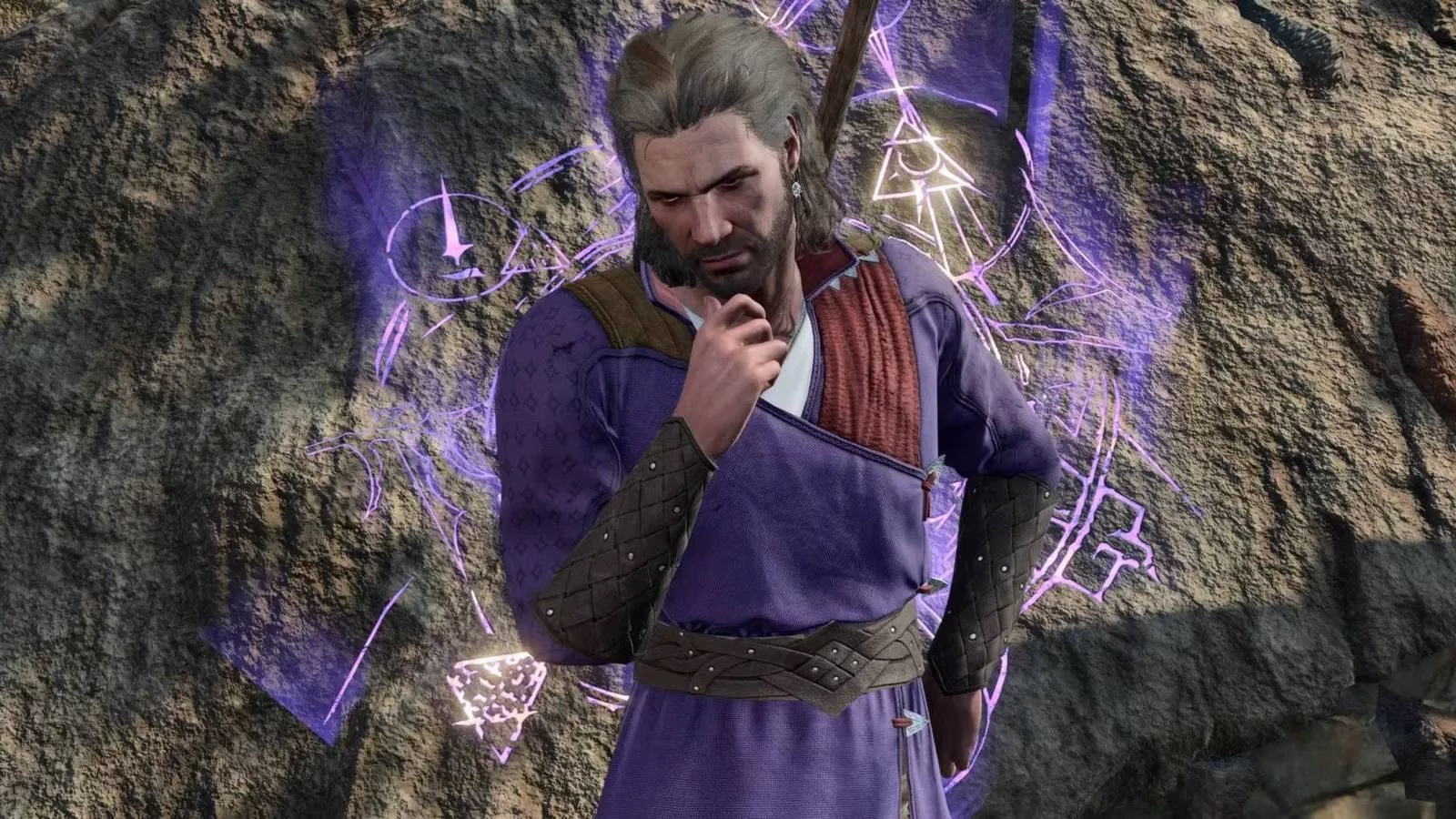
Now, consider the case of Gale of Waterdeep. His story is not merely one of a talented wizard; it is a testament to divine meddling of the most personal kind. As a magical prodigy, he caught the eye of Mystra herself, the goddess who is the very embodiment of the Weave. What followed was not just mentorship but a profound, romantic relationship. Gale himself, in his musings at camp, will tell you that Ao forbids such direct entanglement. "Teaching and bedding a mortal," as one keen observer on Reddit noted, seems to fit the very definition of 'meddling' that the Overgod supposedly abhors. Yet, Mystra did it. She shaped him, loved him, and ultimately, her actions set him on the path that leads directly to the player's party. This isn't distant oversight; this is a goddess weaving her threads directly into the fabric of a mortal's soul. Where was Ao's displeasure then? The silence is deafening, suggesting either monumental indifference or a selective enforcement policy.
📜 The Divine Double Standard: Aylin's Case
The pattern doesn't end with Gale. Look at Dame Aylin, the radiant, immortal daughter of Selune. The game classifies her as an Aasimar, a being with celestial blood. However, lore enthusiasts are quick to point out she is technically a Deva—a direct celestial offspring of a god. Her very existence implies Selune, goddess of the moon, also chose to… consort with a mortal. Aylin lacks the pointed ears of an elf, pointing to a human father. Her life is a constant battle, a target for Shar's hatred, yet she is a living, breathing symbol of a god breaking the so-called prime directive. So, we have two major goddesses directly creating or intimately shaping mortal lives. The evidence of divine interference is walking and talking right beside you in your camp.
🎭 Ao: The Plot-Device God
So, what does this say about Ao? Is he an incompetent overseer, napping on the job while his subordinates throw cosmic parties with mortals? The consensus among seasoned Dungeons & Dragons lore masters is more meta: Ao is a narrative tool. His rule exists for the convenience of the story. When the writers need a reason for the gods to be hands-off during a world-ending crisis like the Netherbrain, Ao's decree is the perfect excuse. It creates tension and forces mortal heroes to rise. Conversely, when a compelling personal backstory requires a divine touch—a tragic love affair with a goddess, the birth of a half-celestial warrior—the writers simply have the gods "risk Ao's displeasure." The displeasure never seems to materialize into meaningful consequence, at least not for the deities themselves. As one fan succinctly put it, this is D&D's version of the classic movie trope where "the cell tower is damaged, so phones are useless"—a convenient plot device to enable or disable elements as needed.

The implications of this selective divine involvement are vast. It paints a picture of a cosmos where rules are less about absolute law and more about narrative necessity. Mortals like Gale and Aylin aren't just people; they are walking plot holes in divine policy, living proof that the gods are far more emotionally invested and capricious than their official dogma would suggest. Their lives are epic tragedies and triumphs precisely because a god chose to cross a line. This doesn't diminish Ao's power; it recontextualizes it. Perhaps his true role isn't to prevent interference but to manage it, to ensure that when gods do step in, it serves a broader, inscrutable story that even other deities cannot fully see. The suffering, the love, the chaos—it might all be part of a tapestry he oversees, where the rule is less a barrier and more a guideline to be strategically ignored.
| Character | Divine Patron/Relative | Nature of Interference | Ao's Stated Rule | Outcome |
|---|---|---|---|---|
| Gale of Waterdeep | Mystra (Goddess of Magic) | Romantic relationship, personal mentorship, implanting the Netherese Orb. | Direct interference forbidden. | Rule apparently ignored. Gale's entire arc is a result. |
| Dame Aylin | Selune (Goddess of the Moon) | Direct procreation, resulting in a half-celestial, immortal daughter. | Direct interference forbidden. | Rule apparently ignored. Aylin exists as a living testament. |
| The Netherbrain | None (Grand Design) | No god intervenes directly to stop the apocalypse. | Direct interference forbidden. | Rule strictly enforced. Mortals must solve it. |
Ultimately, the tales of Baldur's Gate 3 suggest a universe where divine law is as malleable as the Weave itself. Ao's non-interference policy is the backdrop, but the drama happens in the exceptions. The gods, it seems, are just as prone to passion, favoritism, and rebellion as the mortals they govern. They find loopholes in cosmic law, driven by love, pride, or loneliness. For players, this makes the world infinitely richer. Every divine blessing, every cursed artifact from a scorned lover in the heavens, is a reminder that the gods are not just distant powers—they are characters in the story, flawed and active, playing a game where the only constant rule is that the rules serve the tale. And in 2025, as players continue to dissect every clue and dialogue, the legend of Ao's selective attention remains one of the most fascinating lore puzzles in the Forgotten Realms. 😉