A Game Changer: My Deep Dive into Baldur's Gate 3's Patch 8 Subclasses
Baldur's Gate 3 Patch 8 adds 12 subclasses, cross-play, and Photo Mode—revitalizing combat with shadow magic, hexblades, and crown paladins.
It’s 2026, and I still remember the exact moment Larian dropped Patch 8. I was expecting the usual balance tweaks and maybe a new dye color or two. Instead, we got twelve brand-new subclasses, cross-platform multiplayer, a full Photo Mode, and a level of narrative reactivity that made my old save files feel brand new again. As a professional game adventurer, I couldn't wait to tear into each one. Now, after countless hours of testing, roleplaying, and respec’ing, I’m here to share how these additions transformed the Sword Coast for me—and why you should fire up a new campaign right now.
There’s a moment every veteran player dreads: that feeling when your character build grows stale. Have you ever stood in camp, staring at Withers, just wishing for a little more darkness? Larian answered that prayer with the Shadow Magic Sorcerer. I rolled a Drow Dark Urge and immediately felt the Shadowfell’s grip. The class’s homebrewed Hound of Ill Omen became my constant, unsettling companion, and Strength of the Grave turned so many fatal blows into desperate second chances. Few things in gaming compare to hitting 0 HP, passing a Charisma saving throw, and whispering “not today” as you unleash another blast.
Then I dove into the Hexblade Warlock. For years, warlock mains had begged for a subclass that truly made weapon pacts feel lethal. Patch 8 delivered a pact with a Shadowfell entity that let me raise the dead, curse foes with necrotic damage, and wield a blade that felt like an extension of my own damned soul. Roleplaying a fallen paladin who reforged his oath through a sinister weapon became one of my favorite arcs—there’s something poetic about watching a zombie finish off the goblin who mocked you.
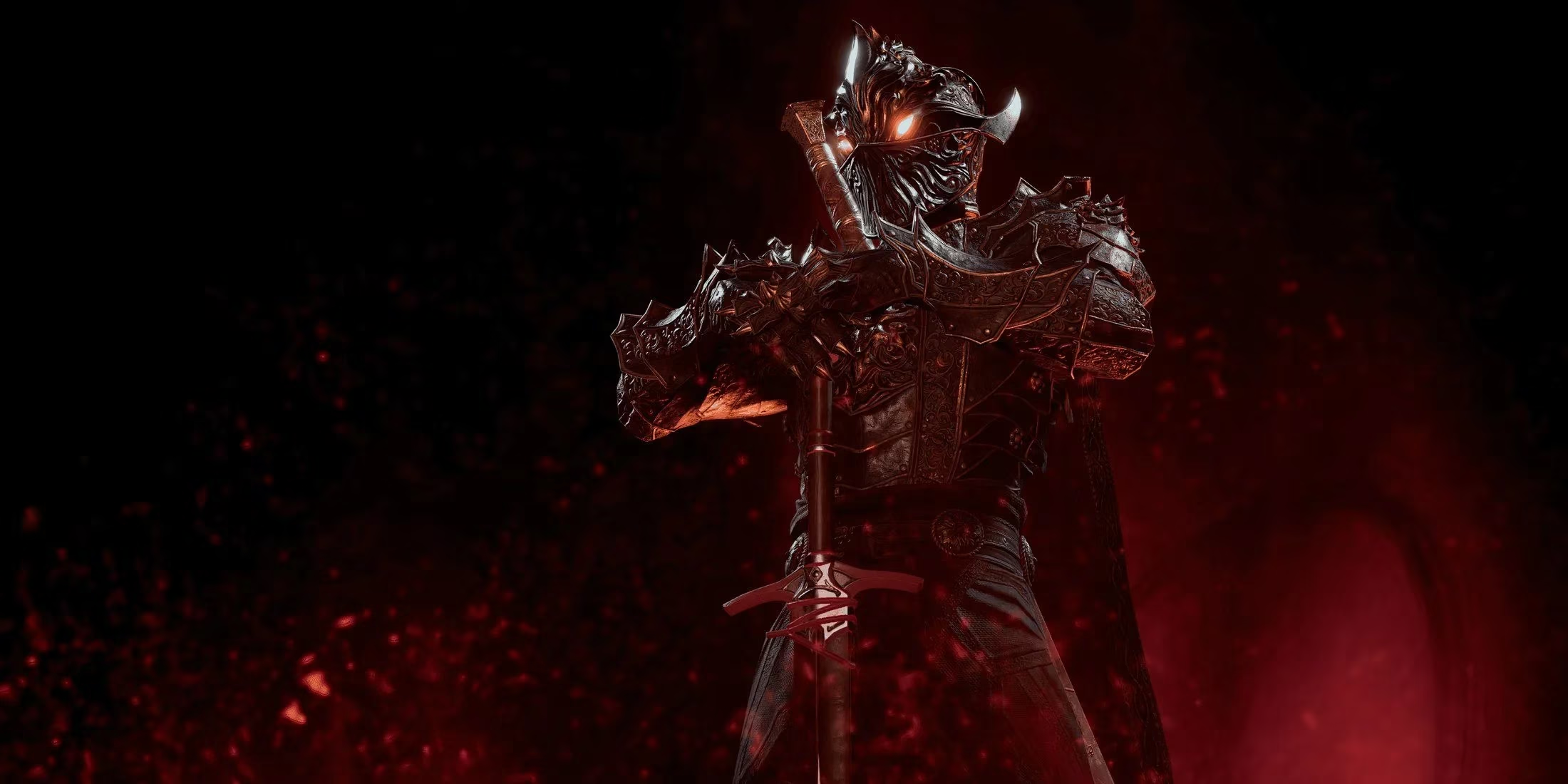
Speaking of paladins, the Oath of the Crown surprised me. I expected a boring, law-abiding soldier, but instead I got a tactical commander. Righteous Clarity boosting my allies while I taunted enemies into terrible positioning felt like playing a different game entirely. And the new reactivity with the Oathbreaker Knight? Chills. I accidentally broke my oath once and the scene that followed was richer than ever—Larian clearly wove in extra dialogue and consequences that make you feel that crack in your soul.
Of course, not every subclass went dark. The Glamour Bard turned my silver-tongued half-elf into a fey-powered rock star. Mantle of Inspiration gave the whole party a hit point buffer while enemies hesitated to strike, and I can’t overstate how gamechanging the new command options are. Making a mind flayer drop its weapon, freeze, then gently walk into my ally’s Spirit Guardians? Chef’s kiss. The Feywild has never felt so manipulative.
Similarly, the Swarmkeeper Ranger made me fall in love with a class I’d once ignored. My wood elf no longer needed one big animal friend—instead, she commanded clouds of jellyfish, flurries of moths, and a legion of bees. Each swarm type brought a different damage flavor and a teleport, making kiting enemies feel like a deadly dance. Watching a hobgoblin get zapped by lightning jellyfish while I blinked away to high ground became my new guilty pleasure.
On the martial side, Path of Giants Barbarian solved one of my oldest frustrations: inventory management. Who needs potions when rage makes you large and grants massive strength? My dwarf berserker turned into a giant and threw enemies off cliffs without ever touching a greataxe. And the carry capacity bonus meant I could hoard every single smokepowder barrel in Baldur’s Gate—pure joy.
The Arcane Archer Fighter finally brought elven archery to life with new animations that made each shot feel cinematic. Banishing an ogre or blinding a drider with a single arrow, then following up with a wave of psychic Fey damage, made me wonder why I ever bothered with a plain sword. This isn't just shooting a bow; it’s painting a battlefield with arcane colors.
And then there was the Drunken Master Monk. I’ll be honest: I laughed when I first read about using alcohol to fuel Ki points. But after a few encounters, I became a staggering, swaying demigod. Intoxicating Strike lowered enemy defenses so consistently that my party’s rogue and warrior landed criticals on repeat. The extra AC and chance to hit from a good bottle of wine felt absurd—and brilliantly thematic for our rowdy tavern sessions.
Swashbuckler Rogue felt like a love letter to every pirate-loving player. Melee combat with a rogue usually meant risking opportunity attacks, but Fancy Footwork let me dance in, disarm an enemy, blind them, and sashay back out without a scratch. I built a dual-wielding scoundrel who could solo flank entire rooms. It wasn’t just powerful; it was elegant.
For spellcasters seeking more depth, Bladesinging Wizard turned my frail human into a sword-dancing virtuoso. Intelligence modifier to AC and supernatural speed meant I could frontline better than most fighters while still dropping fireballs. And the elven tradition lore woven into the dialogue choices added a layer of roleplay immersion I never expected.
The Death Domain Cleric deserves a special mention for its homebrewed exploding corpses and the Toll the Dead cantrip. That bell sound before damage procs is hauntingly perfect. I played a cleric of Kelemvor who saw necrotic damage as a natural transition, not evil. Watching enemies flee from their dead allies’ bodies was darkly satisfying and offered a genuine alternative to the healing-bot stereotype.
Finally, Circle of Stars Druid gave me the shapeshifter flexibility I always craved. Choosing constellations that adapted my role—healer, damage dealer, or constitution-based strategist—made every long rest a moment of careful planning. I could be the party’s tank in one fight and its primary healer in the next, all without ever casting a single Wild Shape charge. That’s the kind of versatility this game rewards.
Has Patch 8 changed Baldur’s Gate 3 forever? Absolutely. These twelve subclasses aren’t just reskins—they shift combat strategies, deepen narrative choices, and invite replayability on a scale I haven’t seen since launch. Whether you’re a returning veteran or a curious newbie, 2026 is the year to step back into the Sword Coast and find out which subclass will define your legend. I’ve already rolled my next character. The only question is, how will you break your oath?